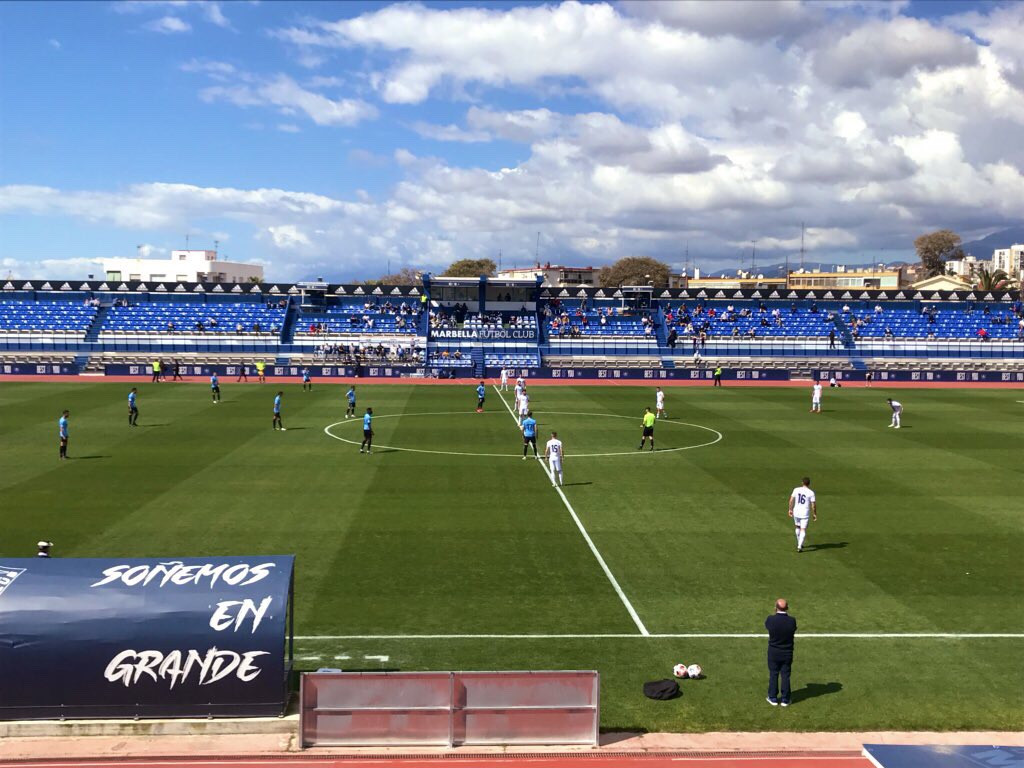

(Experiences and photos from 2019 – 2021)
This piece is quite different compared to what I usually produce but, I’m hoping that it’ll get a good response from football fans across the UK and Spain, along with being useful for everyone.
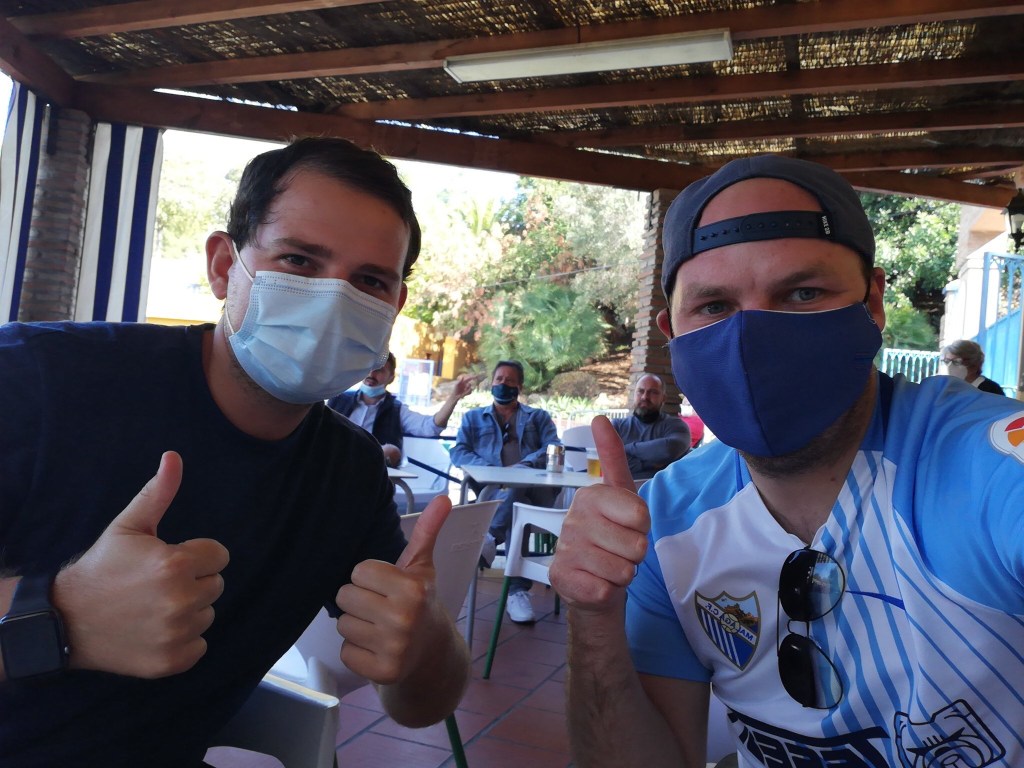
I’ll be taking an in-depth look at the city and football grounds of Marbella, providing all of the necessary information you’ll need if you intend to book a trip to this part of the world and, in particular, if you’re wanting to travel to watch some local football matches whilst you’re there. Marbella is considered to be a hub for the Costa Del Sol region in southern Spain, it’s widely known for being the more luxurious stretch of this coast and has been the (second or third) home to many famous faces, some of whom still have properties in the hills or around the upmarket Puerto Banús district. Local resident, Málaga CF supporter, and beer enthusiast Matt Harrison told me that “Marbella is a place of glitz and glamour, however, that is only a tiny modicum of what the city actually is”, which I fully agree with as, in my opinion, I feel that Marbella is an all-round nice place to visit with plenty to see and do in its vicinity. There’s also numerous other notable and interesting places within a short distance away, all of which will be covered in this guide…
Travel –
The closest and (by far) easiest airport for travelling to Marbella is Málaga, located only 50km north along the coast and an easy journey on the AP-7 Motorway (via tolls). There are regular buses (ran by Avanza) that head in either direction, up to every 30-45 minutes during the peak season, that I’ve always found to be reliable and relatively inexpensive compared to public transport in the UK. There’re a few other airports in Andalucía that are also reachable, since there are direct buses (or travel via Málaga) to the cities of Granada (approx 3 hours) and Seville (approx 4 hours) that run daily from Marbella’s bus station. Slightly more inaccessible but still reachable is Jerez (de la Frontera), which you can travel to via Cádiz (approx 3.5 hours). In theory, you could also travel to Marbella from Gibraltar airport, via a bus from the neighbouring border town of La Línea (de la Concepción), however, it’s not currently a viable option due to ongoing issues and restrictions surrounding Brexit and Covid. In regular circumstances, it (hopefully) wouldn’t be too much hard work but, I’ve found flying into Málaga to be consistently cheaper and more accessible.
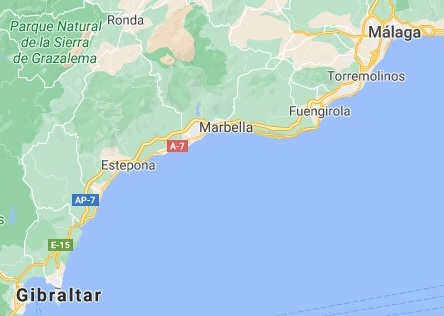
Marbella is also well-connected with the rest of the Costa Del Sol, with numerous buses servicing a variety of the region’s towns and villages that run between Málaga and Algeciras, many of which stop (or terminate) at the ‘Marbella Estación de autobuses’ (Bus Station) and / or the ‘Marbella Centro’ (Centre) stops. Here’s the current timetable for the regional buses – Horarios LR_01022021_Ed_01.pdf (avanzagrupo.com). There isn’t a train line in this particular area, however, I find the bus system to be extensive and frequent enough that you’re always covered. Coaches are available to take you to some of Andalucía’s most well-known and popular cities, including some incredibly long journeys to far flung places such as Alicante, Madrid and even Barcelona. Only attempt these if you can cope with a lengthy bus journey and can’t get domestic flights or high-speed trains from Málaga. Bendy-buses make up the majority of shorter journeys to the likes of Fuengirola (M220) and Estepona (L79), whilst you’ll also find an array of small blue ‘urban buses’ (L1-L10), which ferry people between the bus station, city centre, shopping centres and Marbella’s many popular touristy suburbs, including the likes of Puerto Banús located roughly 7km down the coast. It’s worth bearing in mind that Marbella’s main bus station (on Avenida Hermanos Blánquez) is actually located about 2km away from the centre, although, there’s plenty of buses which will run between the city and it’s station should you be struggling. The bus station is well signposted on many of the major road routes around Marbella.
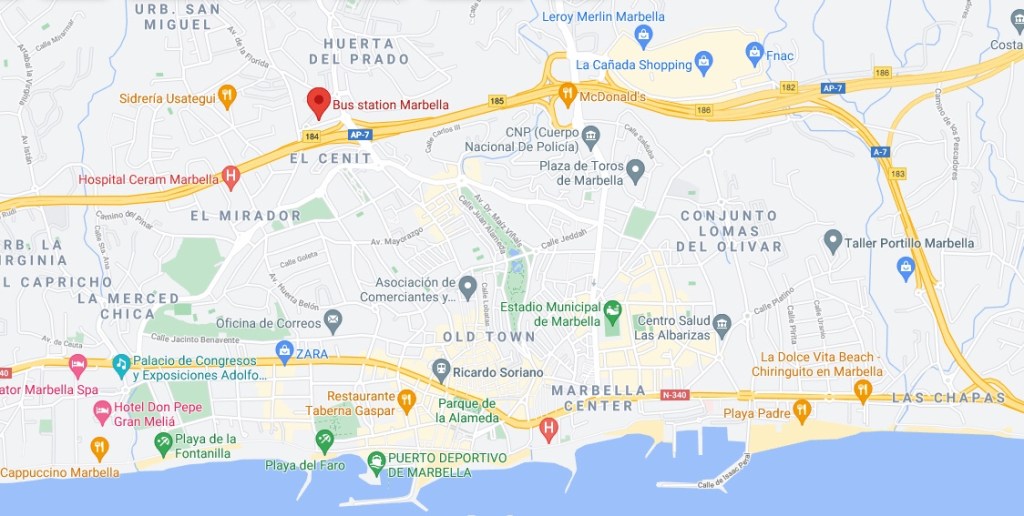
Taxis are aplenty in the centre, particularly at any of the tourist hotspots, including around the Old Town, seafront and ‘Puerto Deportivo’ (Port) areas, meaning that you’re always be covered if you need them. They don’t come cheap but, they are reliable. I’ve got no experience of driving or parking in Spain but, parking in the centre seems to be limited (as with most of Spain’s cities), with underground car parks being popular for many of the busier areas. I’d say that these are your best bet if you’re staying close to the centre. Generally, the roads don’t seem too bad for traffic, although, expect there to be queues during the peak season and for parking to be even tougher. It’s worth checking beforehand if there’s any parking available close to wherever you’re staying or attending in Marbella, as this will vary from place to place.
Marbella highlights and recommendations –
The city itself comes highly recommended by almost everyone who visits. Marbella has some of the best beaches in the Costa Del Sol, along with wonderful views looking out to sea towards Gibraltar and Morocco in the distance and inland towards the Sierra Blanca mountains. Marbella’s name translates as “beautiful sea” and you certainly see how it got it’s name. You’ll also find some of the best weather in the world here, owing to the aforementioned mountains that shelter the city from the wind and, mean that there’s (usually), a low number of days it rains per year. Some of the best weather I’ve experienced in this region has been during the ‘off-peak’ season, particularly around February – March time, where temperatures can still reach around 25 degrees with little to no cloud cover, making for some very pleasant days out. The summer time brings more heat, usually 30 degrees or higher, so be prepared for very hot and dry days that are filled with glorious sunshine.
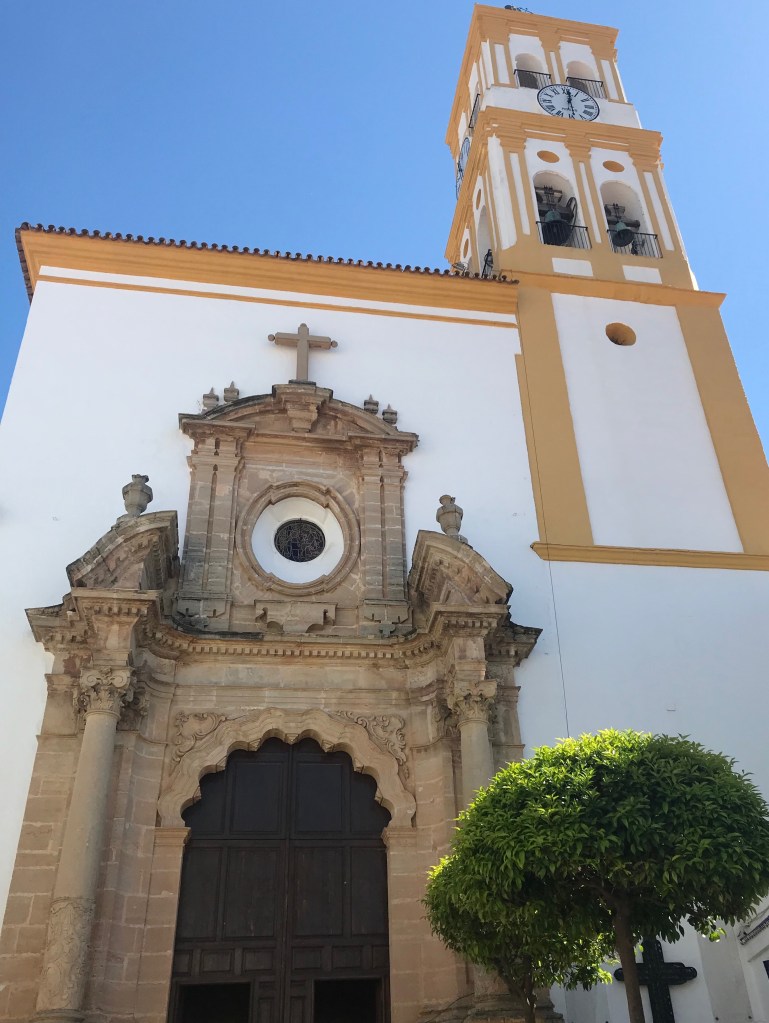
Simply put, the Old Town is lovely, making it an ideal starting point for a walking tour of Marbella. There’s a lot of intersecting alleyways that are home to a wide range of interesting and unique bars, restaurants and boutique shops. It makes a pleasant change from the busier Main Street (Av. Ricardo Soriano / N-340) shops and the bustling seafront area. I’d advise you to take your time when exploring the ‘Casco Antiquo’, as you’ll discover a lot of hidden gems, my personal highlights being the ‘La Encarnación’ church and the wonderful ‘Plaza de los Naranjos’. It’s a nice walk around the walls that surround the Old Town too, where you can find a handful of shops selling the typical range of souvenirs and, among other delicacies, Spanish pastries, my favourite spot for snacks being ‘Panadería Pastelería Cantero’. Matt shares my love for the area, stating that “the beautiful Old Town houses some of his favourite places in Marbella”. There’s also a wide range of bars for you to choose from, in particular, he highlights ‘The Tavern’ (on Calle Peral), which is a “small bar run by scouse couple Pam and Ken – Marbella stalwarts that have been owners since 1982. Everton FC and Málaga CF memorabilia covers the walls, with it being the perfect place to watch a football match on the TV whilst enjoying a friendly welcome and a cold beer”. I can also highly recommend The Tavern, with Pam and Ken giving me a warm welcome during my visits to for Mahou Cañas and shots of Pacharán (#PointsMeanPacharán). Typical choices of drinks in this region are Café (Coffee) or Cerveza Caña (draught Beer) and I’d recommend trying Málaga’s own Victoria Cerveza if you get the chance, which is the province’s favourite beer. Drinks are typically in the €1.50-2.50 price range for a coffee or draught beer.
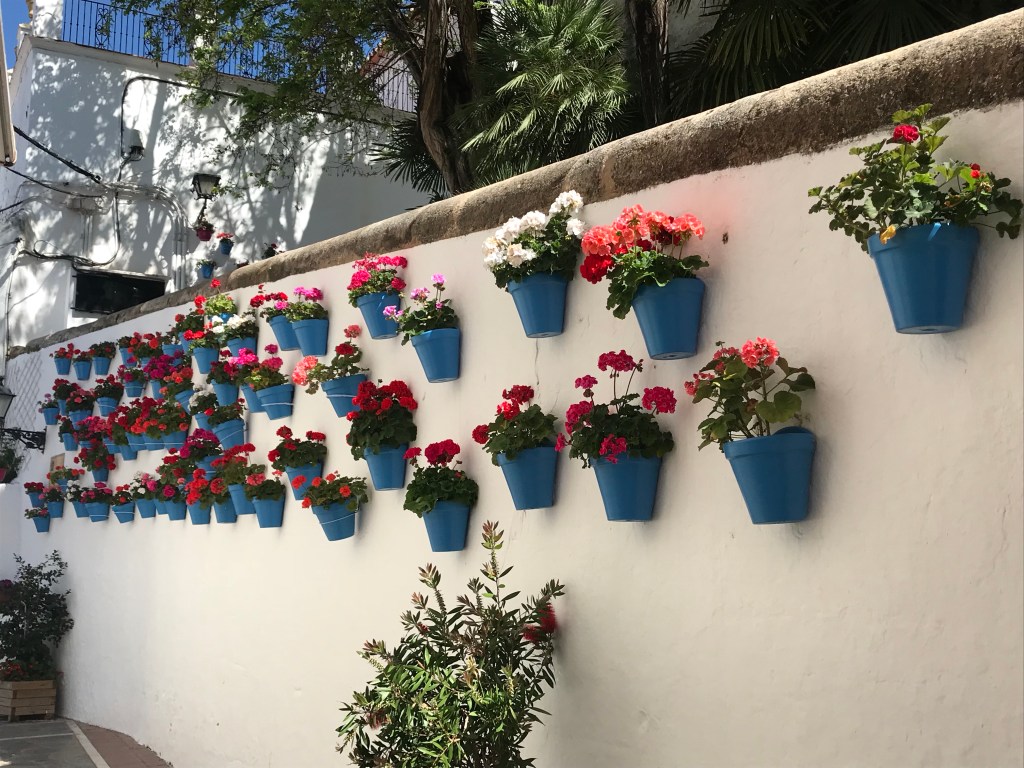
You don’t have to walk far to get some good food, with there being plenty of pleasant places close by to get your traditional Spanish options of Tapas or Churros. Matt recommends the ‘Mia Café’ (on Calle Remedios), a “cool health-food orientated tapas restaurant that always has a good atmosphere and great food”. It’s also one of the few places locally that sell his beloved Victoria Cerveza, which he describes as “Málaga’s finest” for good reason, having personally sampled a couple of Cañas from ‘Mia Café’. Another highlight of his is ‘Bar El Estrecho’ (on Calle de San Lázaro), a place that is “considered legendary in Marbella and has regularly won awards for its tapas, with it being particularly busy on Friday and Saturday evenings”, which is when you’ll see most Spaniards eating and drinking until the early hours of the following morning.
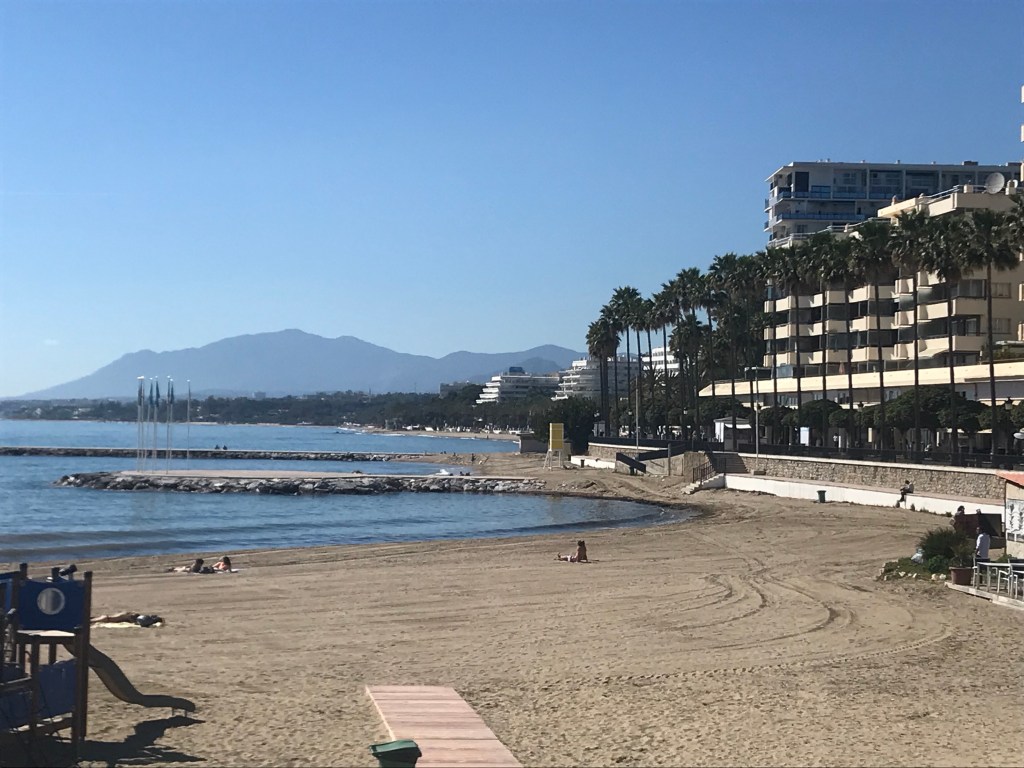
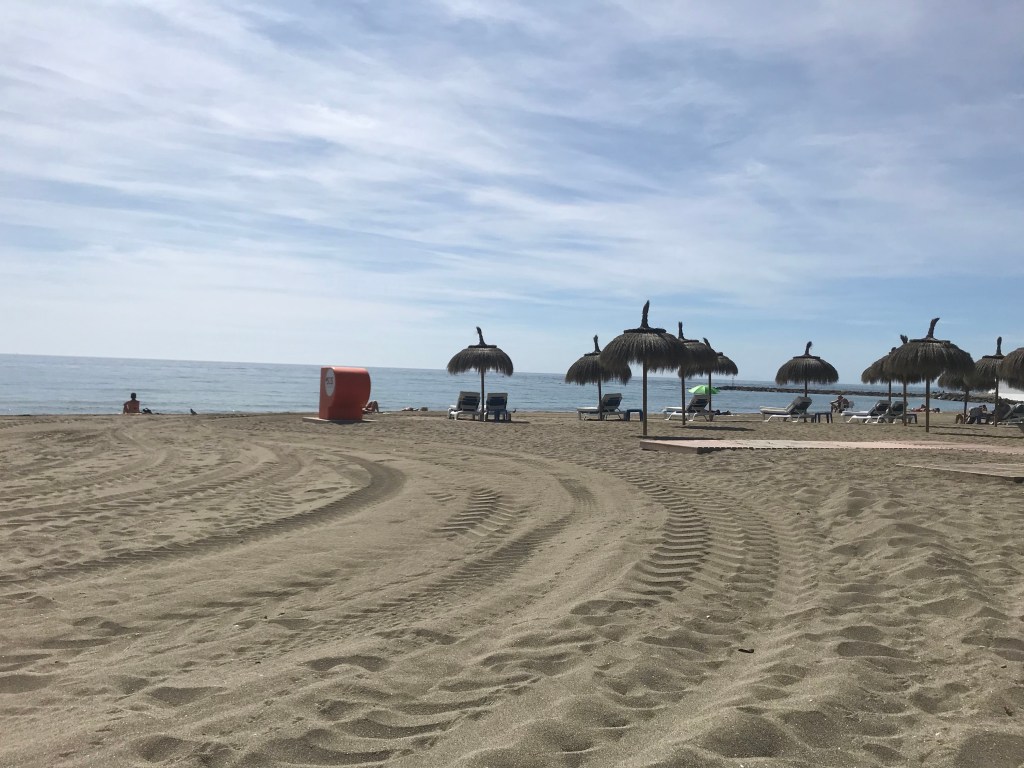
The seafront is well-kept and has a long coastal path which makes for a nice walk, including a variety of internationally themed bars and restaurants, which Matt says will “cover all of your needs”, particularly those found in the more exclusive areas such as the port. The beaches have got golden sands and are usually not crowded (unless you’re in peak season), with ‘Playa de Venus’ being the central and most popular one. The city centre boasts a range of large chain stores that run along the Main Street, which are enough to keep most shoppers happy but, the nearby ‘La Cañada Shopping Centre’ (on Calle Ojén) across the AP-7 motorway out of the centre, specialises in the more designer and popular international brands. It also has a large ‘Alcampo’ supermarket inside that offers a wide range of products at cheaper prices, particularly when compared to the similar (but smaller) markets located in the centre.
Fútbol / Balompié –
Now comes the time to take a closer look at the football clubs and grounds that can be found in and around Marbella. Whilst living out in Spain, my first point of reference when looking for football matches over a particular weekend, was to search on ‘La Preferente’ (lapreferente.com), which is a comprehensive website that shows the fixtures, results, tables and team-sheets for all Spanish matches, including women’s, youth and junior age groups. It’s guaranteed to direct you towards endless possibilities of games if you explore the depths of the site. I’ve also used ‘Soccerway‘ for many of my previous foreign football jaunts, however, this is mainly useful for the higher-level games, whereas La Preferente is more reliable for the lower-level ones. The Andalusian Football Federation website (RFAF) also has a lot of information about their leagues and fixtures, should you want to cross-reference a particular fixture or team but, it’s better to have a basic understanding of Spanish to navigate the website fully. Its also very easy to watch a variety of Spanish football matches online, either through Malaga 101 TV, RFAF TV or Marca Marbella (on YouTube), who all do a fantastic job of showing numerous lower-level games regularly and free.
Málaga CF –
Estadio La Rosaleda
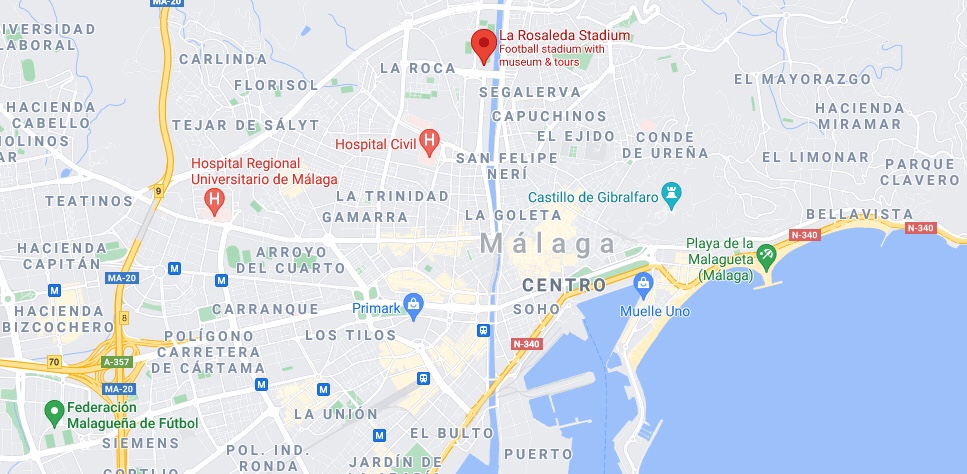
Marbella is located in the Málaga province, meaning that Málaga’s football club, Málaga CF, rule the roost here. The club have had numerous well-documented issues over the last few years and currently find themselves sitting around mid-table in the Segunda (second) División, Spain’s 2nd Tier of football. Their stadium, Estadio La Rosaleda, is a beauty, a bowl-shaped ground that currently has a capacity of just over 30,000. In usual times, they’ve been averaging crowds of around half of the ground’s capacity per game (although some were far more) and, tickets have been both cheap and easily available through the club’s website (www.malagacf.com), which has an English translation option.
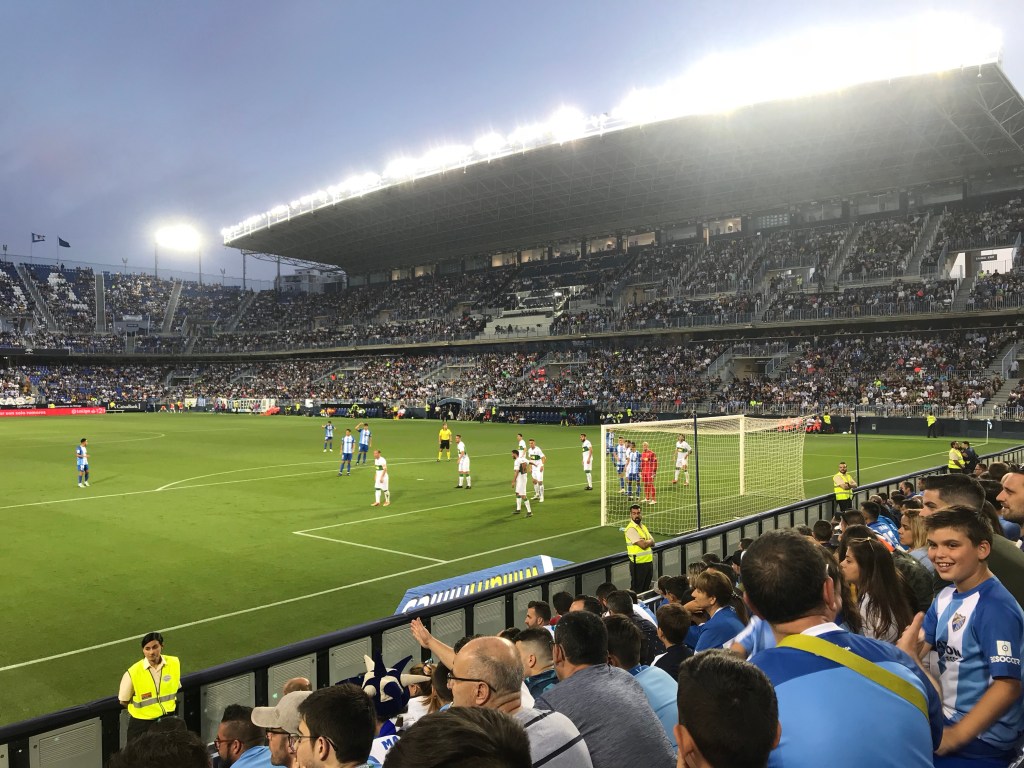
Travelling to Málaga from Marbella is quite easy, with regular bus journeys into the city centre taking up to an hour (on a Directo bus) and then a long walk (around 30 minutes) to the football ground (on Av. de la Palmilla). There are a few different buses going from various points across the city which stop close to La Rosaleda (15 is the closest), so you’ve got options if you’re short for time. If they’re hosting an afternoon or early evening match, you shouldn’t have a problem with returning to Marbella afterwards, but if kick-off is later than 6pm (particularly on a Sunday), it’ll be tough to rely on public transport for the return journey. There are supporter groups who travel to Málaga CF games from the Costa Del Sol, who you can get your transport sorted through, check out the “Guiri Army” (Malaga’s ex-pat fans) on Facebook for more details. Their current ‘HQ’ is ‘Bar Ibensa’ in Benalmádena, if you want to meet up and go for a drink with them. Matt is always happy to chat about the club and, he hosts the excellent Málaga CF podcast ‘Guiricast’ (Spotify – https://open.spotify.com/show/4WtmzX2NhiXravfJt5Vshu?si=4s8AI59uRF2Uy6mToLLmdA), which previews, reviews and interviews everything relating to Málaga CF!
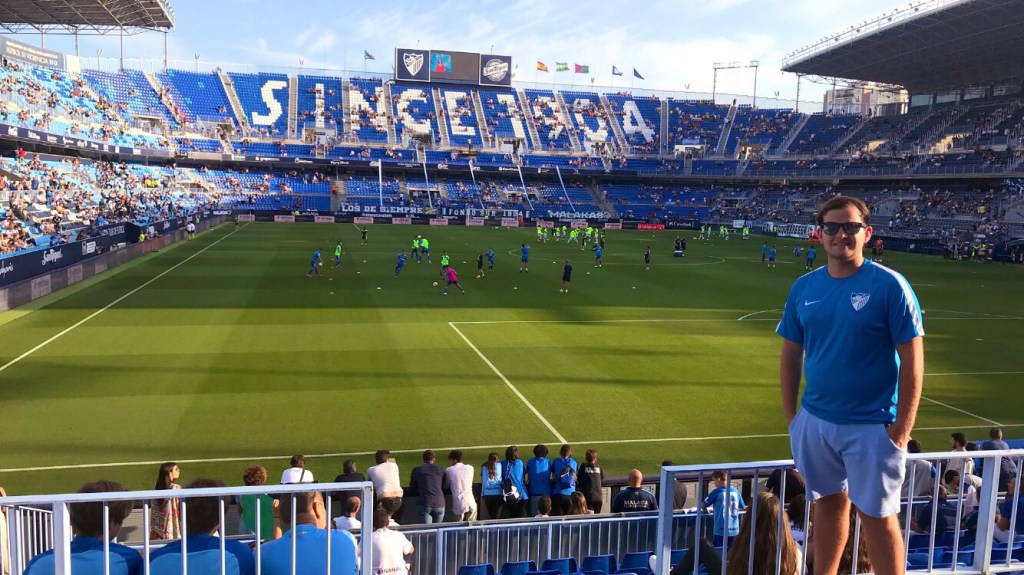
My report on Málaga CF vs Elche CF – https://adayinthelifeofafootballtherapist.sport.blog/2020/05/17/andalusian-adventures-rocking-the-costa-del-sol/
Marbella FC –
Estadio Municipal Antonio Lorenzo Cuevas
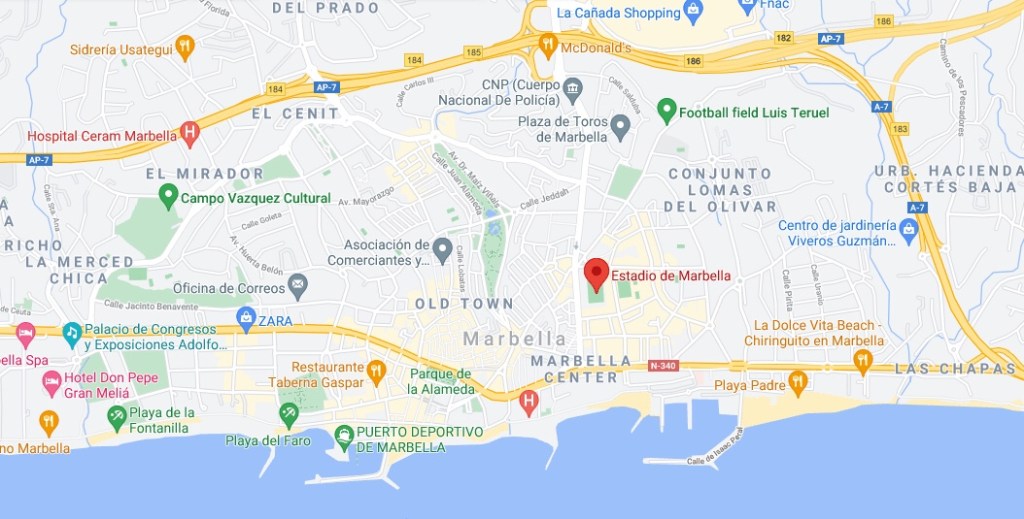
Marbella itself is home to four senior football clubs, which I feel is quite good going considering there’s only around 140,000 people in the city. The largest (and only) professional club found there is Marbella FC (on Travesía Huerta los Cristales), which you’ll quite often pass on buses running between the bus station and the centre. It’s also the closest ground to Marbella’s centre and the seafront, making it easily accessible on foot. They’ve been relegated from the former ‘Segunda División B’, being the regionalised third tier of Spanish football, which changed at the end of the 2020/21 season when the RFEF implemented a restructure. The previous five leagues at the third tier (the largest in Europe) have became two ‘Primera División RFEFs’ (north/west and south/east geographically), with the new tier created beneath (Segunda RFEF) consisting of five leagues. Marbella are in the odd situation where they were relegated twice at the conclusion of last season (to the Tercera RFEF Group 9), despite originally setting their sights on promotion to the Segunda División. Yet another reminder that nothing is guaranteed in football…
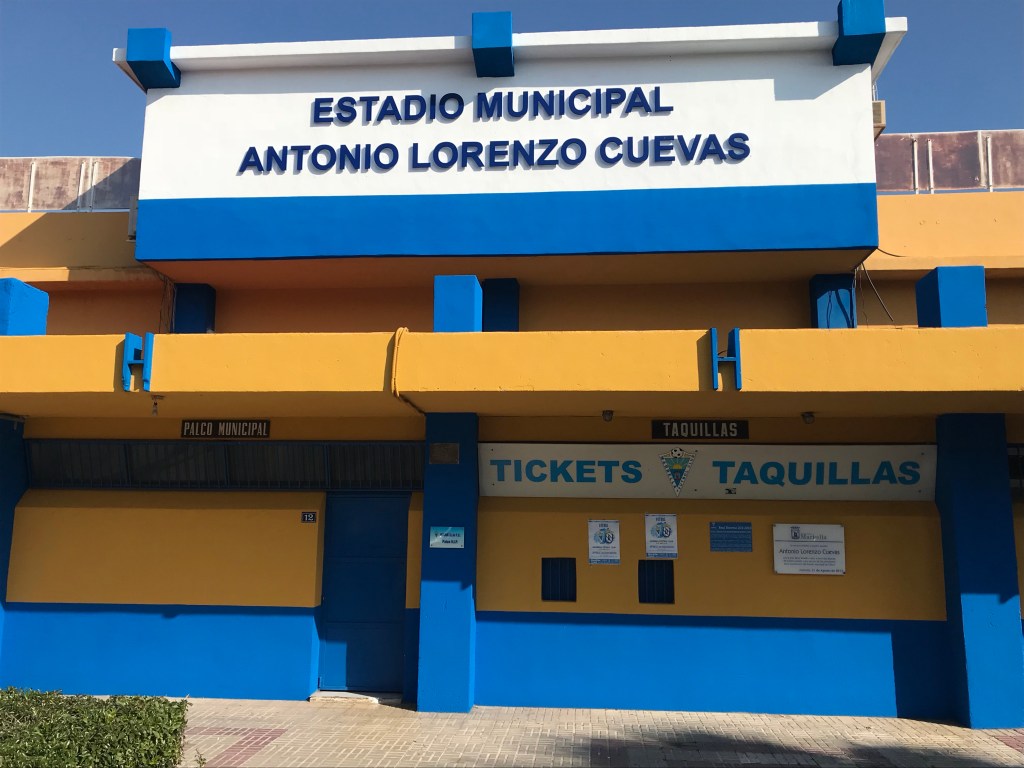
Their home, Estadio Municipal Antonio Lorenzo Cuevas (or Estadio Municipal de Marbella), has got two uncovered seating stands (it’s not like you need the cover anyway), that run along either side of the pitch and are elevated above the ground, making for a good view of the action. There is a running track around the pitch but, the sight lines are good and you don’t feel far away from the match. The capacity of the ground is around 7,000 (though more like 4,000 currently), however, the club have done well to sell-out a capacity of 800 fans for numerous games during this Covid affected season. Their home matches typically take place on Sundays, they had favoured a midday kick-off previously but have recently been hosting more evening matches (usually 7pm or 8pm). You may get lucky and spot a midweek pre-season friendly (Amistoso) or a Copa Del Rey match, though generally the league fixtures don’t get played midweek. It’s always worth checking out ‘Football Impact’ (Football Impact.com) as well, since they arrange friendly fixtures for overseas teams using nearby facilities such as the Marbella Football Center (more on that later), which include some games either taking place at, or involving Marbella FC.
Tickets are easy to buy, just head to the club shop on the ‘Preferencia’ side of the ground (opposite the main stand) on Calle Ricardo Lucena Sola, where you’ll be greeted by their lovely staff who speak excellent English and can assist you. Due to the various restrictions that have been in place over this season, tickets have typically gone on sale to the public a couple of days before the match and you’ve needed to fill out a contact information form before you enter the ground. If there isn’t an attendance limit set by the Covid restrictions, then buying on the day isn’t an issue, simply head to the side that you want to sit and buy a ticket at a booth or the club shop. Ticket prices are generally in line with what you’d expect to pay at this level, varying between €10 and €20 for this season, depending on the capacity limit and the competition of the game. Marbella FC have also started producing a free monthly magazine for this season, providing all the information about the club plus interviews and other features, which is a real rarity in this region and might help to entice some foreign visitors. The club shop has got an extensive range of merchandise, although, it isn’t cheap when you compare them to the region’s bigger clubs. That hasn’t stopped me buying a Marbella FC shirt, scarf and face mask though!
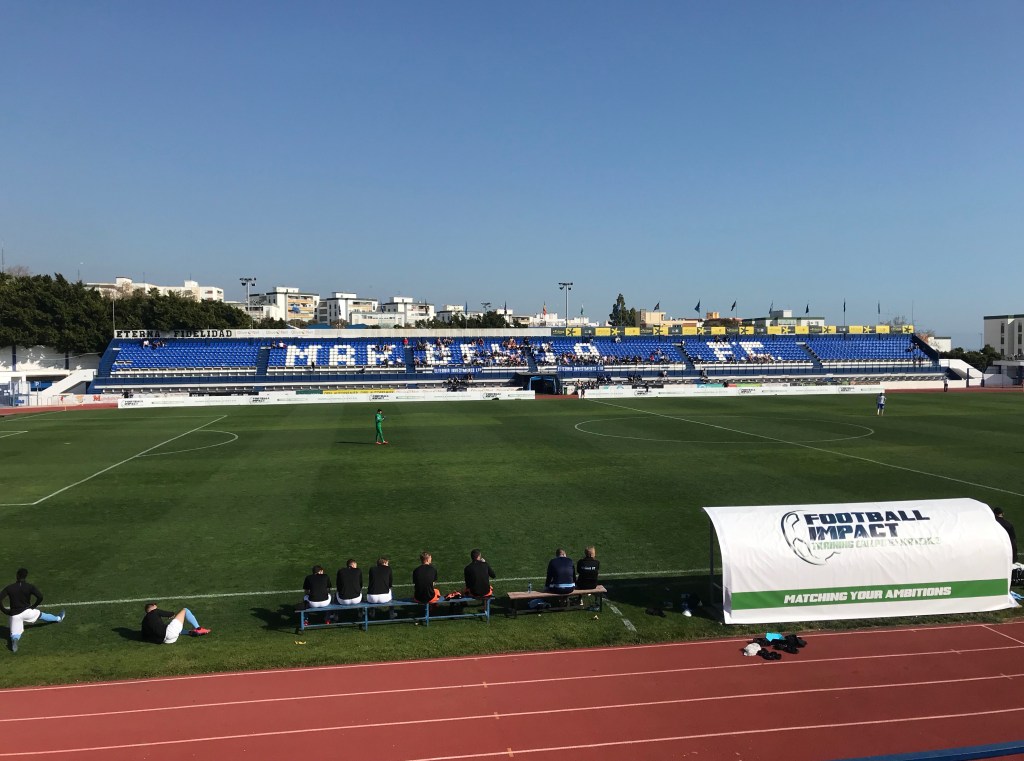
They’re a professional team, so it goes without saying that the standard of football is very good, particularly when you compare it to some of the football that’s played in England’s third tier. Marbella FC have had some big names play for them over the years and last season’s roster included former La Liga and Premier League player Esteban Granero, who is a joy to watch, but has now sadly announced his retirement. Inside the ground, there’s a bar on either side with Málaga’s Victoria Cerveza on draught and once in your seat, you’ll usually have a clear view of the sea on one side and the hills the other, it’s overall a very pleasant fan experience and is actually the only ground in Marbella (and one of only a handful in the region) where you can see the sea.
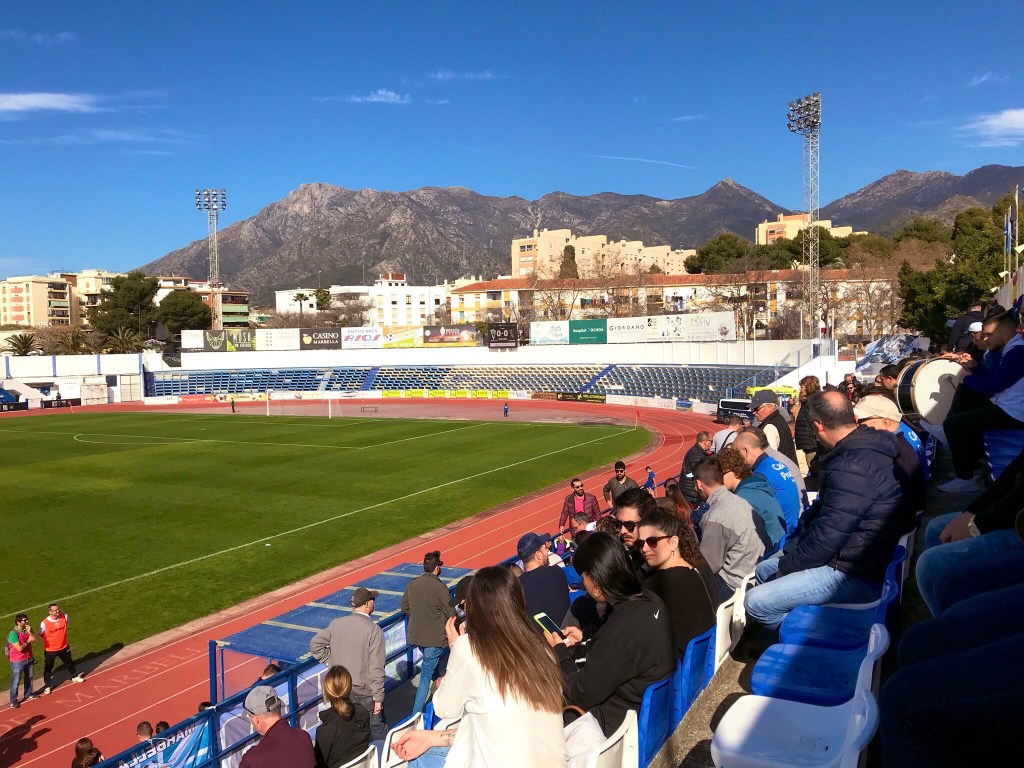
Matt told me that Marbella FC’s stadium is “located in an area that has more of an ‘authentic Marbella feel’, because of the lack of foreigners who reside there”. He recommends wandering around the ground’s vicinity as “there are lots of small, non-descript cafeterias and tapas bars with a very lively feel to them, serving very cheap food and cold beers”, although, acknowledges that “you might get a bit of a strange look if you’re a ‘Guiri’ (Spanish slang for foreigner), as Guiris rarely venture into those streets but, you will certainly be welcomed”. I can vouch for that, as you’ll find some very pleasantly surprising places to visit for a good matchday experience in the local area.
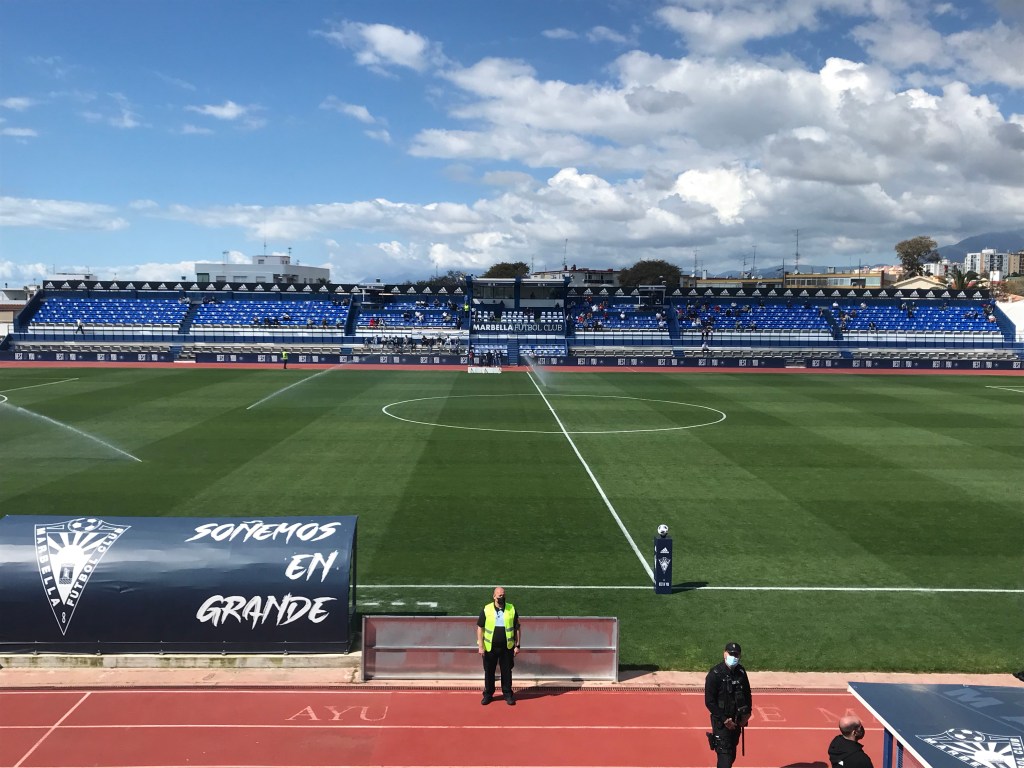
Getting to the ground is straightforward, since “Marbella is not a huge place, so it’s a relatively simple 10-15 minutes walk from the centre or 20 minutes from the Puerto Deportivo” (Matt), with the closest widely used bus stops being ‘Marbella Centro’ and ‘Saneamientos Puya’. There’s also an array of street parking found in the roads surrounding the ground, leaving you with all the options easily covered and meaning that you shouldn’t have anything to worry about for your trip. Their recent closest rivals have been RB Linense (from La Línea) in the Segunda División B, but their double relegation has meant that they’ll now be facing nearby Juventud Torremolinos CF and UD San Pedro (more on them later). You can find the club on social media outlets (@marbella_fc) where they can answer your questions in English. The lower-level clubs in the city tend to arrange their kick-off times to avoid clashes with Marbella FC, which is very useful if you intend on watching multiple matches in a day. An enjoyable football ground overall, that’s well worthy of a visit.
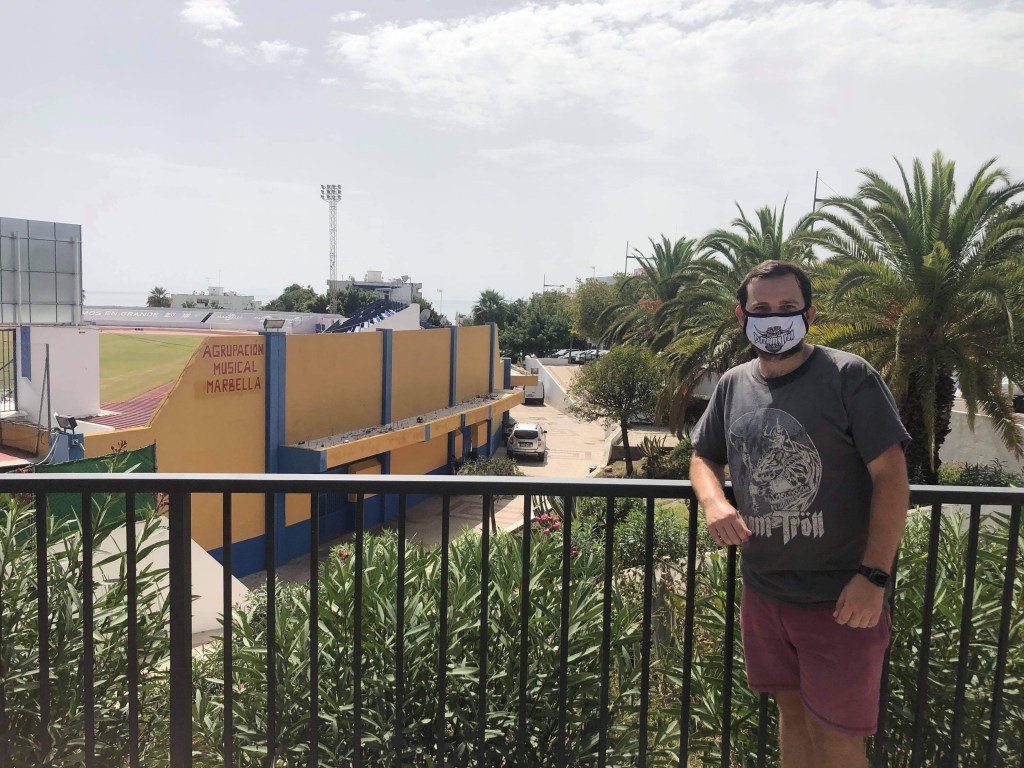
My report on Marbella FC vs Real Valladolid CF – https://adayinthelifeofafootballtherapist.sport.blog/2021/03/15/the-kings-cup/
CD Atlético Marbella –
Campo Luis Teruel Aguilar
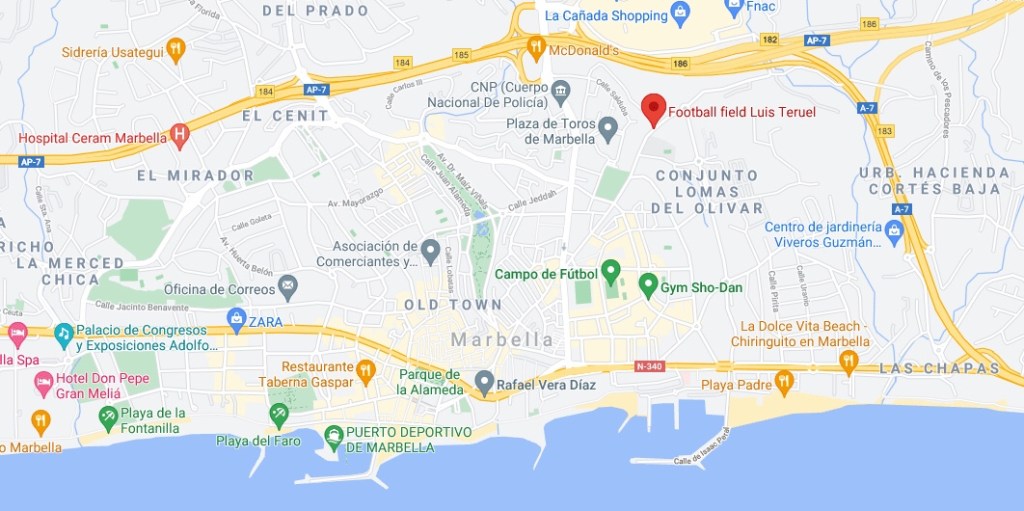
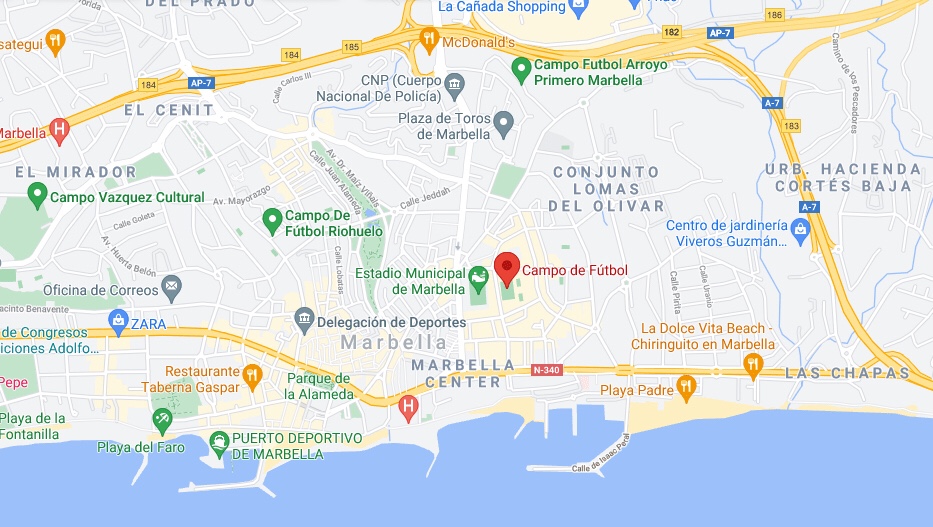
The second-highest ranked football club in the city is Club Deportivo Atlético de Marbella Balompié, to give their full name, who play at the Campo Luis Teruel Aguilar to the north-east heading out of the centre, on Calle Príncipe de Vergara.
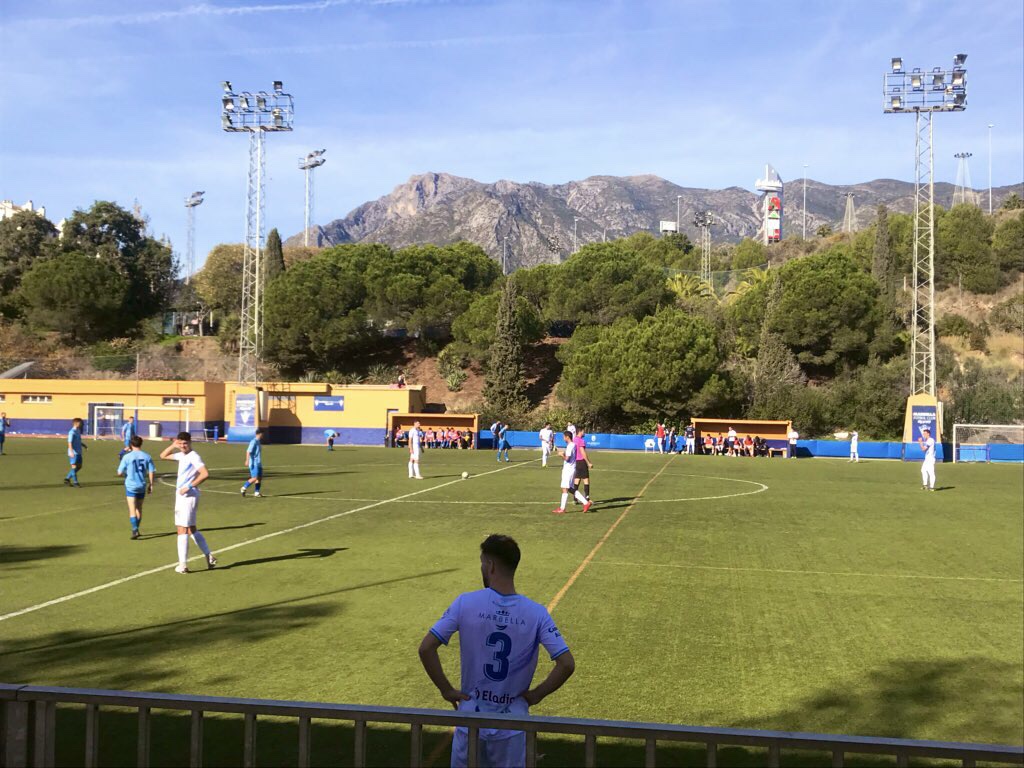
They currently compete in the Primera Andaluza Málaga, along with the likes of fellow Costa Del Sol clubs AC Fuengirola, CP Mijas Las Lagunas, CD Mijas and CD Atlético Benamiel, which I would say is the equivalent to around step 4-5 of the English Non-League pyramid. The football is usually of an impressive standard given the level, being very technical focused and played at a high tempo, making it well worthy of the €5 admission. CD Atlético Marbella have an amazing offer to become a club ‘Socio’ (Season Ticket Holder) for only €10 a season, with the aim of enticing more people to keep returning to watch their games, which is fantastic value for money. With good football on offer at an affordable price, what’s not to like?
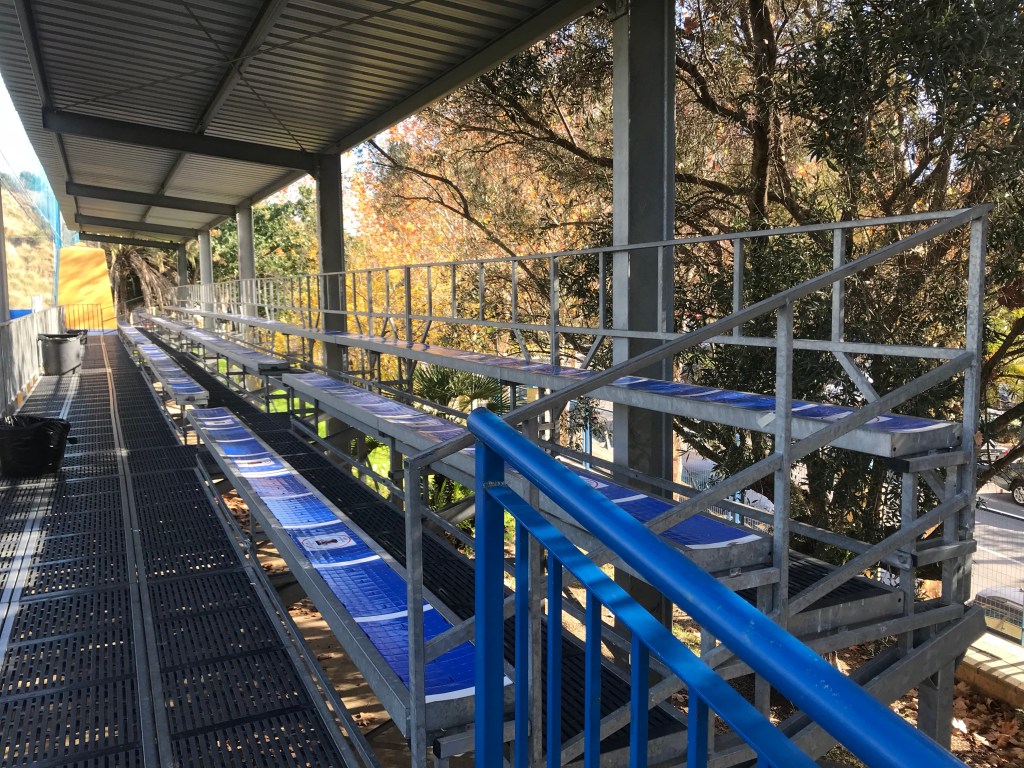
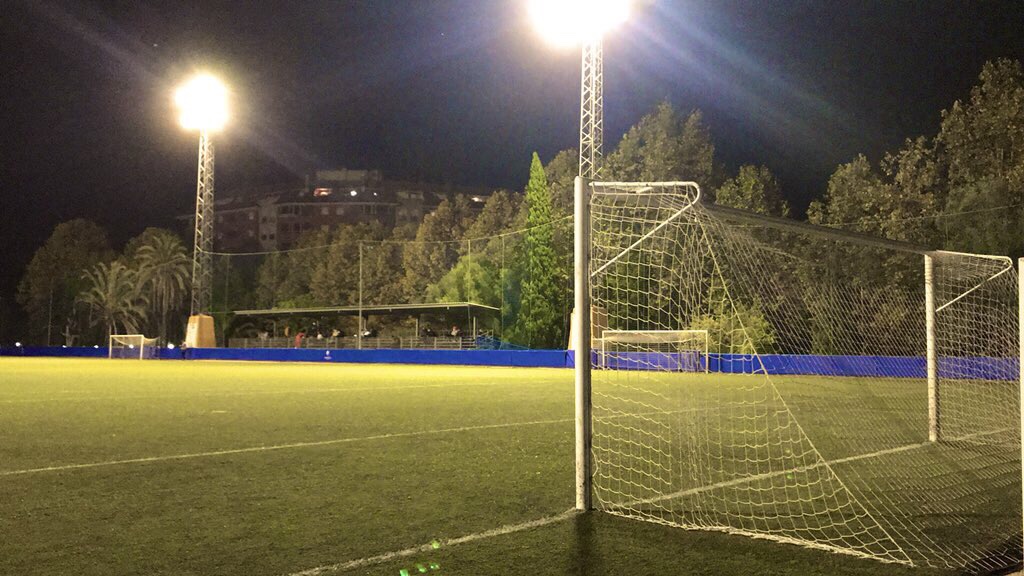
The ground isn’t exclusively theirs (similar to many of the smaller clubs) and, is used by a variety of Marbella’s junior clubs, including many of the Marbella FC age group teams. CD Atlético Marbella are the only senior team to use this ground though and typically play evening matches (Saturday or Sunday), with a few games on Sunday at Midday when it doesn’t clash with Marbella FC. The ground has a noticeable entrance and boasts a covered seating stand (holding over 100 people), along with a good-sized bar area and the usual facilities that you come to expect at this level in Spain (3G pitch, floodlights, changing room, dugouts). The food and drink at the bar is very reasonably priced, plus, it makes a nice place to sit and enjoy a beer whilst watching a football match.
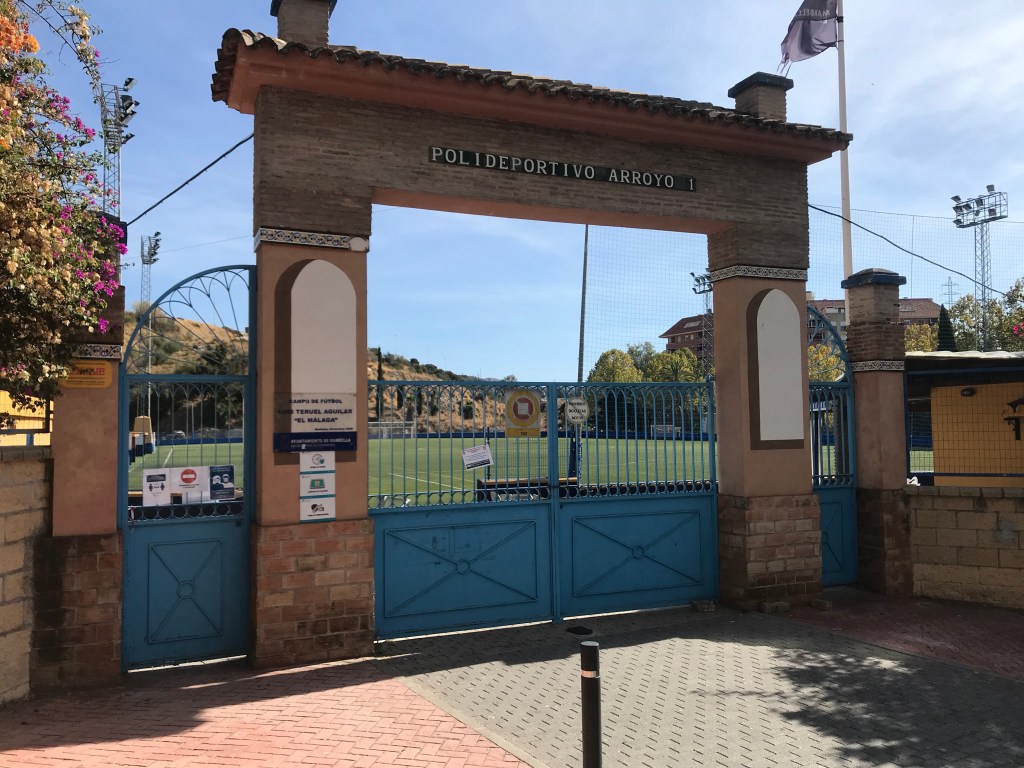
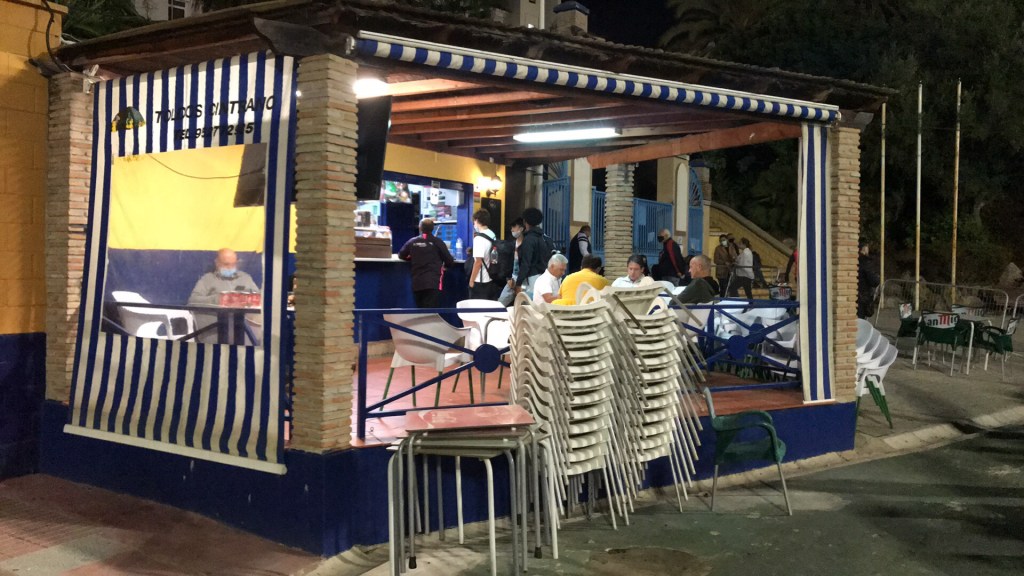
The club are very active on social media (@AtcoMarbella) and are happy to provide any information and answer your questions in English, they also have a fantastic website (atleticodemarbella.com), which provides an English translation option (thanks to their Press Officer, Javier). I can honestly tell you that they’re a great club who treated me well during my time in Spain, so I’m hoping to revisit them as soon as possible. To walk here is slightly further than Marbella FC from the centre (at just over 20 minutes) but, it’s still quite straightforward. The closest bus stops are called ‘Polideportivo Arroyo Primero’ (L3 only) and ‘La Perdiz’, which can reduce the walking distance considerably. The ground is located beneath the AP-7 Motorway and, is close to the exit for the ‘La Cañada Shopping Centre’ so, if you’re driving here then you’re best option is to head in that direction, then follow Calle Salduba into Calle Príncipe de Vergara and drive to the bottom of the road for this ground, with street parking readily available close by. Once you’re in the Calle, this ground is the one closest to Calle Fray Agustín de San Pascual and, is not to be confused with Arroyo Primero 1 located slightly further up the hill, which we’ll take a look at later on.
My report on CD Atlético Marbella vs UD Algarrobo – https://adayinthelifeofafootballtherapist.sport.blog/2021/02/27/the-art-of-football/
CD Atlético Marbellí –
Campo Antonio Serrano Lima
One tier below CD Atlético Marbella you’ll find nearby CD Atlético Marbellí, not to be confused with each other due to their remarkably similar (shortened) names. Marbellí actually translates as “the people of Marbella”, which represents the difference between the two clubs. They play in the Segunda Andaluza Málaga, alongside an array of other Costa Del Sol teams but most notably local rivals UD Ojén, a small village in the hills above Marbella which is home to a very decent ground considering their size (that’s reached by the L80 bus).
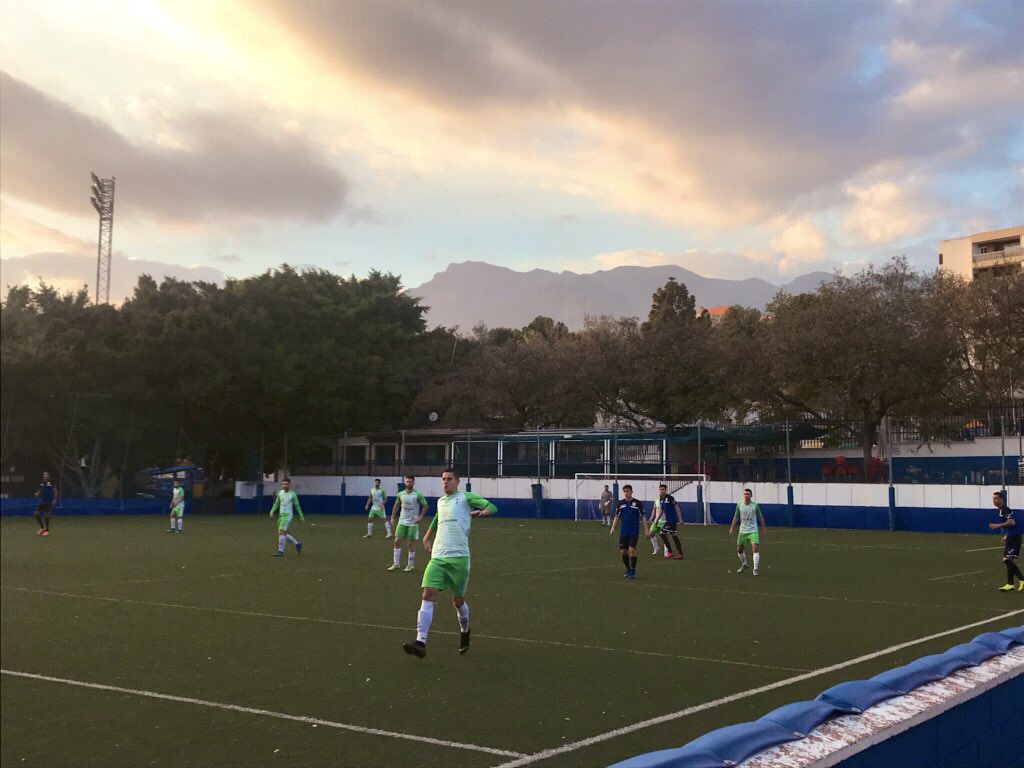
Marbellí’s home ground is Campo Antonio Serrano Lima, whose entrance is conveniently located on Calle Vicente Blasco Ibáñez, directly behind the ‘Preferencia’ side of Marbella FC’s ground. The primary tenants here are CD Peña Los Compadres, a local junior set-up, but Marbellí are the only senior team to use this venue. Even though this may seem like a more basic set-up than the other grounds, it’s still a very pleasant place to watch a game of football. There’s two rows of uncovered seating running down one side of the ground (holding around 100 seats), along with a bar that is raised above the goal on the same side as the entrance. Apart from that, it’s generally what you’d commonly expect to find at this level of football in Spain, much like CD Atletico Marbella in the section above. Space is at a premium in this particular area but, they’ve done well to get smaller pitches in the complex for all their junior team’s needs. If you come here for an evening match, you’ll be able to get some lovely views looking towards the hills in the distance on your right (from the seats), along with the back of Marbella FC’s ground straight in front of you.
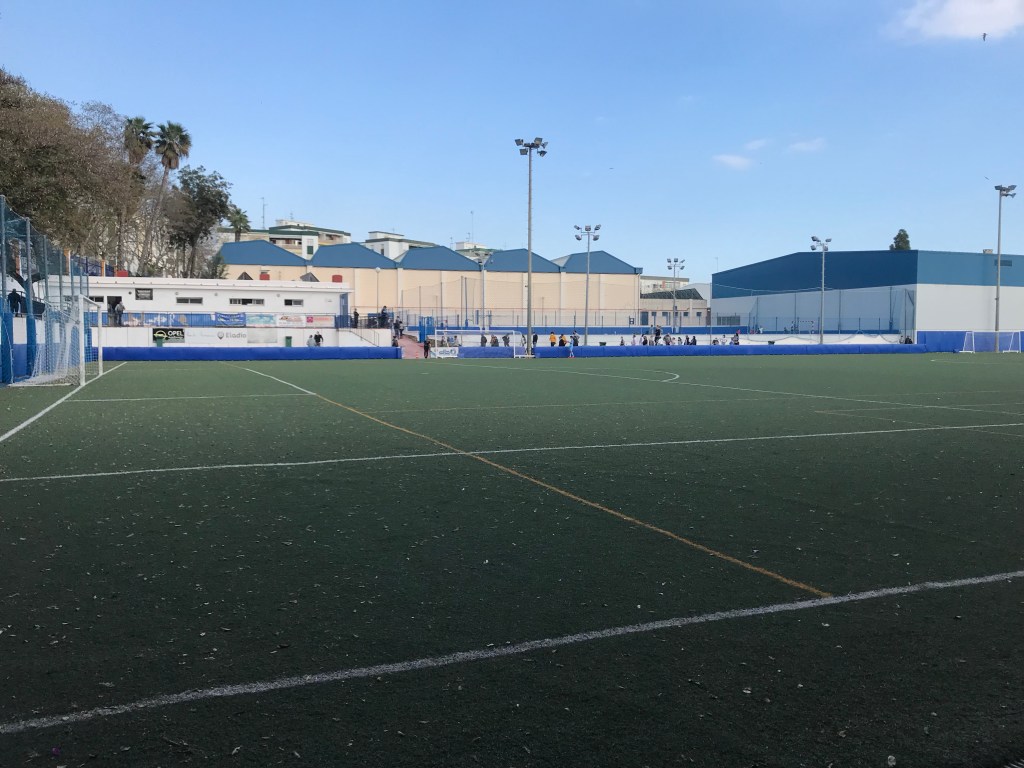
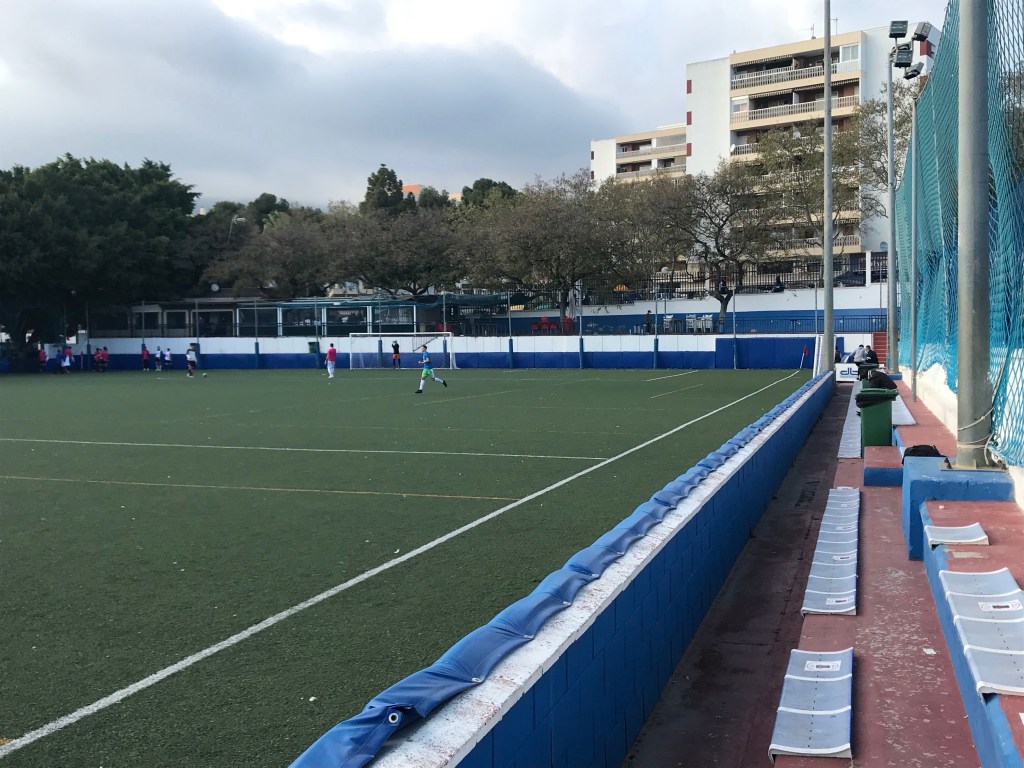
An advantage of dropping down to the lower levels is equally low admission prices, which varies between being €3 to free of charge, since most clubs are just glad to get visitors. The majority of clubs here make their money off the bar, so a couple of trips for cheap beers, coffees or snacks always helps them out greatly. It’s a basic set-up overall but, it’s still what you’d get at around Step 6 of the Non-League system in England and, being located next door to a professional club does have its advantages. It certainly makes this an easy ground to spot and travel to, plus they also like to avoid time clashes with their larger neighbours. It’s worth reaching out to the club on social media (@AtcoMarbelli) before you visit, just to confirm the kick-off day and time, as I have found out the hard way with two late postponements (due to Covid cases), leaving me with wasted journeys on both occasions.
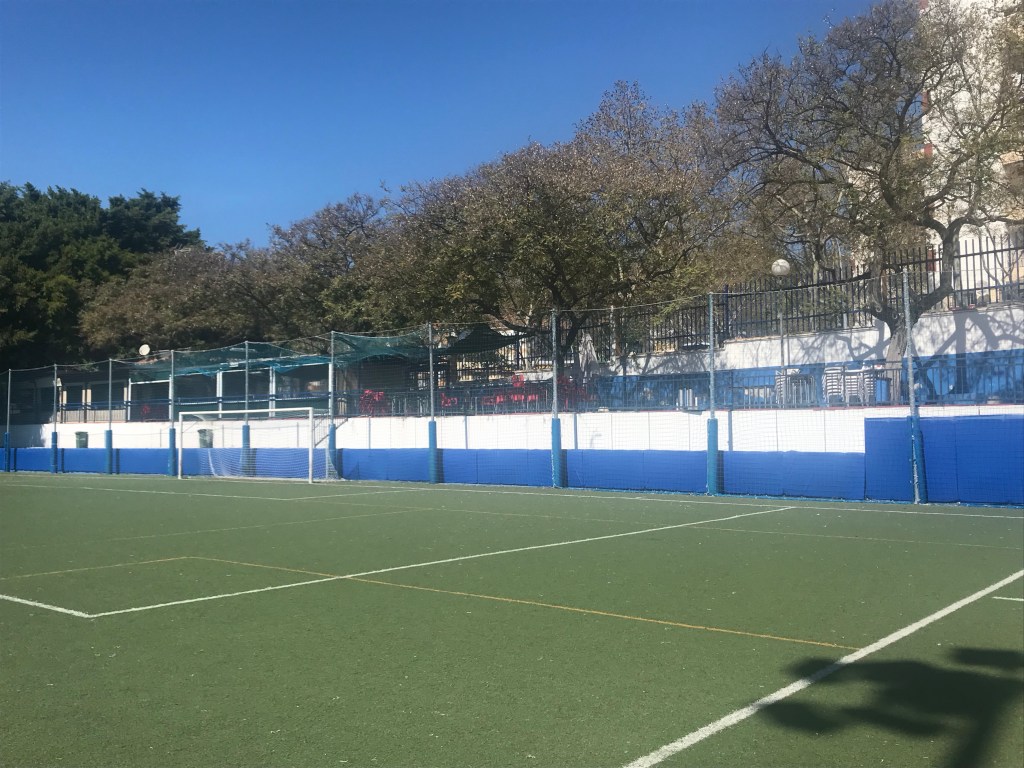
They’re a good club that will treat any visitors well, their club president actually sent me a lovely message following a previous article that I wrote about visiting them, which is what makes doing these articles worthwhile. If you’re travelling here, the best advice is to head to Marbella FC’s ground, whether that’s walking, on the bus or driving, since it’s well signposted and easier to spot. Parking is available in the surrounding streets and the closest bus stop is ‘Piscina Municipal Cubierta’ (L2 & L3) or ‘Saneamientos Puya’ for a lot more options. There’s plenty of bars and restaurants in the vicinity around the ground, so it’s a good place to spend the afternoon if you’re intending to travel around Marbella or the Costa Del Sol region.
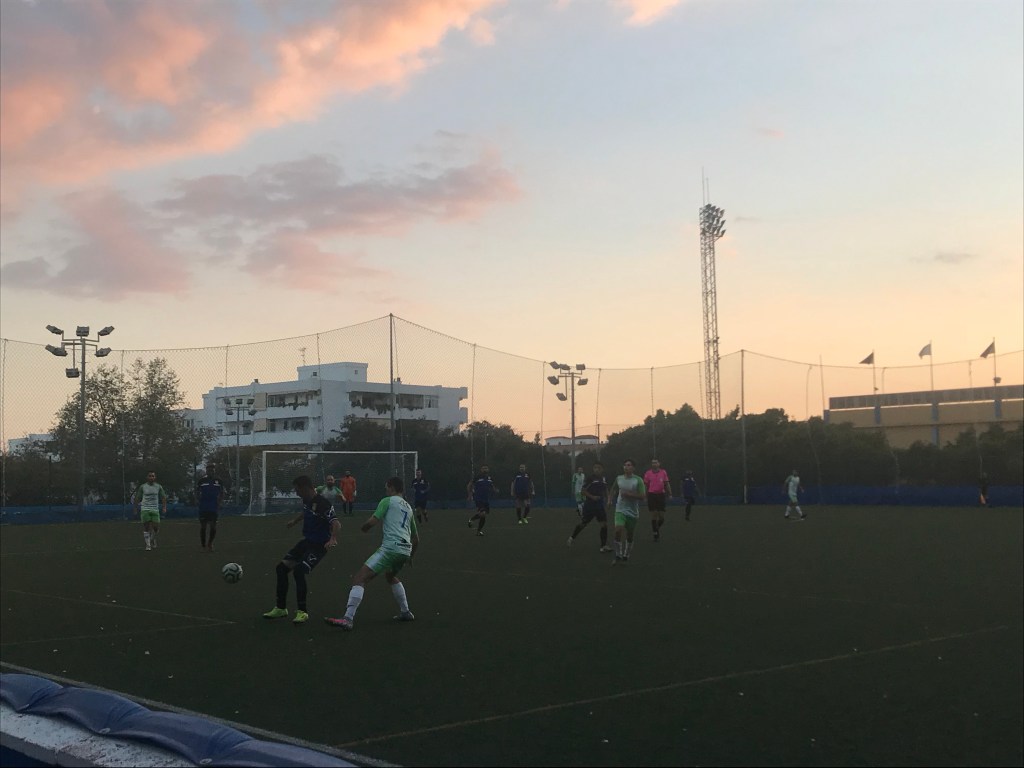
My report on CD Atlético Marbellí vs Totalan Atlético -https://adayinthelifeofafootballtherapist.sport.blog/2021/04/08/vamos-atletico/
AD Pablo Picasso CF –
Campo Arroyo Primero 1
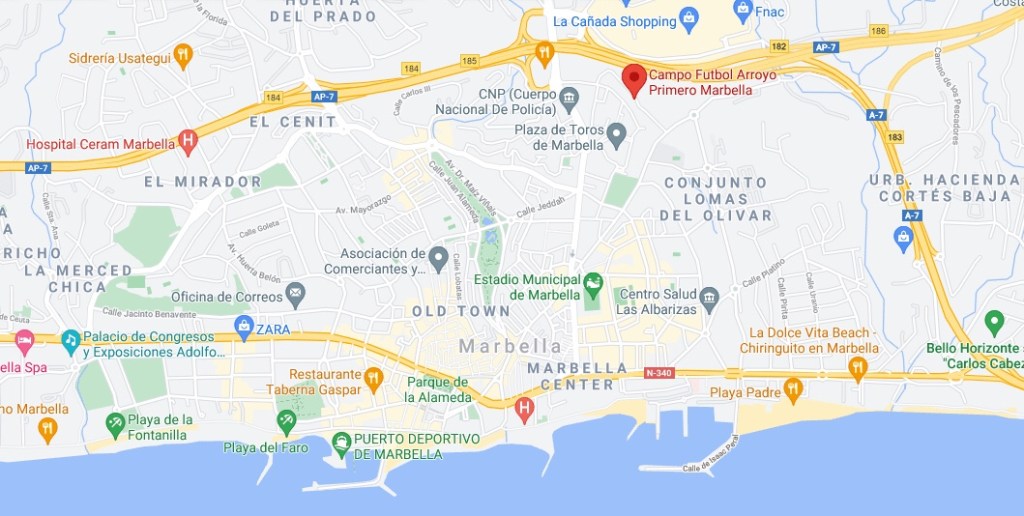
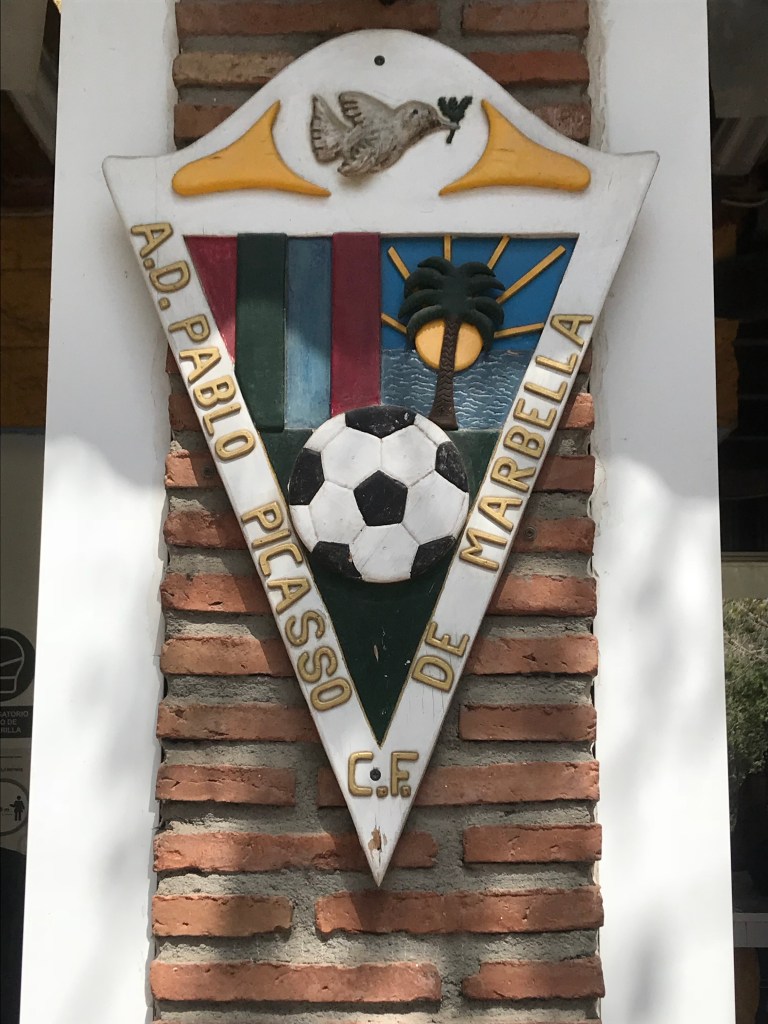
The lowest-ranked senior football club in Marbella may also be the one that is most intriguing and appealing to the majority of people reading this guide. Playing in the Tercera Andaluza Málaga, the lowest level of senior football in the region (but certainly watchable), a visit to Pablo Picasso is usually quite memorable and can give you a good story, as me and Matt found out when we witnessed Pablo Picasso draw (against Málaga’s C team). Puns are guaranteed when visiting their Campo Arroyo Primero 1 base and the club seem to be all for it, judging by their reactions to our posts on social media. I couldn’t tell you about any connection between the club and the artist (I have tried to research it) but, we believe that it’s linked to a road name in the local area. Whatever the story behind the name, it’s certainly a unique combination.
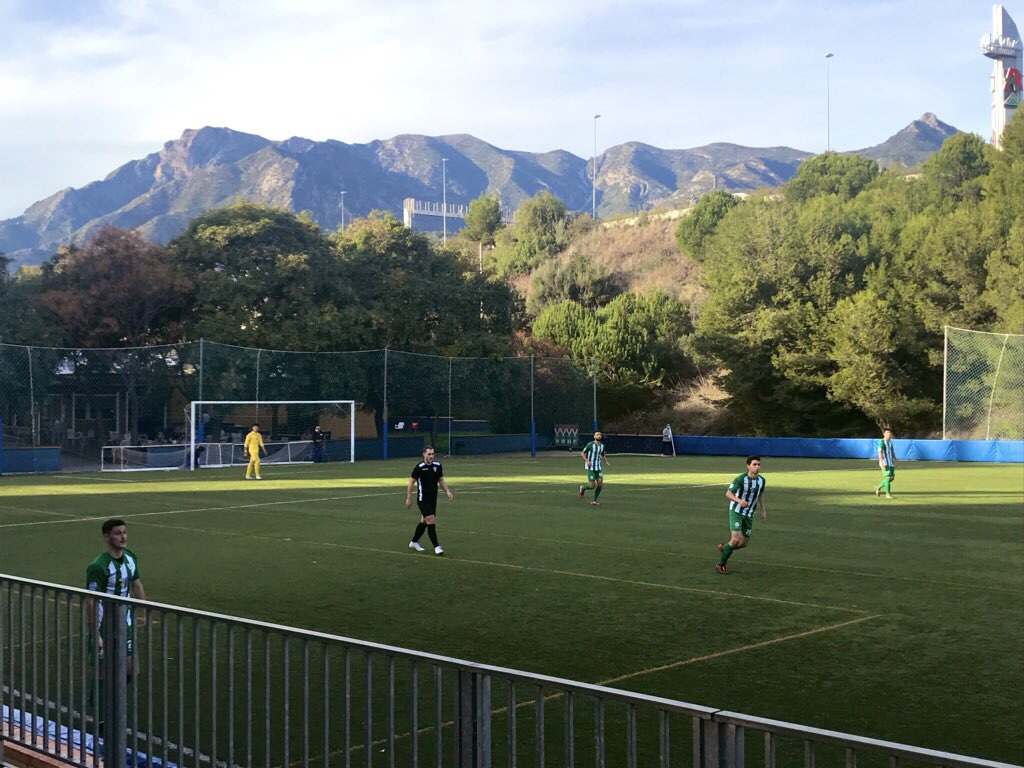
I find the ground and the football played to both be of a decent standard despite their lowly position, competing against the likes of nearby Nueva Andalucía, CDF Banús and CD Estepona’s B team, which makes for an interesting mix of fixtures and results. Their ground can be found next door to the Campo Luis Teruel Aguilar (on Calle Príncipe de Vergara) and, in numerous ways this has a similar set-up, though, in truth, the stand and bar area are both larger, plus, the views overlooking the hills (looking behind the bar side goal) are some of the best you can get, particularly in the light evenings. The stand doesn’t have much elevation, although, the 200 odd seats will not usually be full so you can still get a good view and, even the view from one of the tables beside the bar is good enough to watch the action unfold (from personal experience), whilst you can simultaneously enjoy sipping on an ice cold bottle of Cruzcampo. Overall, this has the feeling of a very decent ground at around Step 5 of the Non-League pyramid in England. It’s also directly beneath the AP-7 Motorway, meaning that behind the dugout you’ll see a large grass bank with the road towering above you, making for another interesting view. The club are also very active on social media (@PabloPicasso_CF) and are happy to interact with you, they’ve certainly liked the attention that me and Matt have given them when we’ve visited this season.
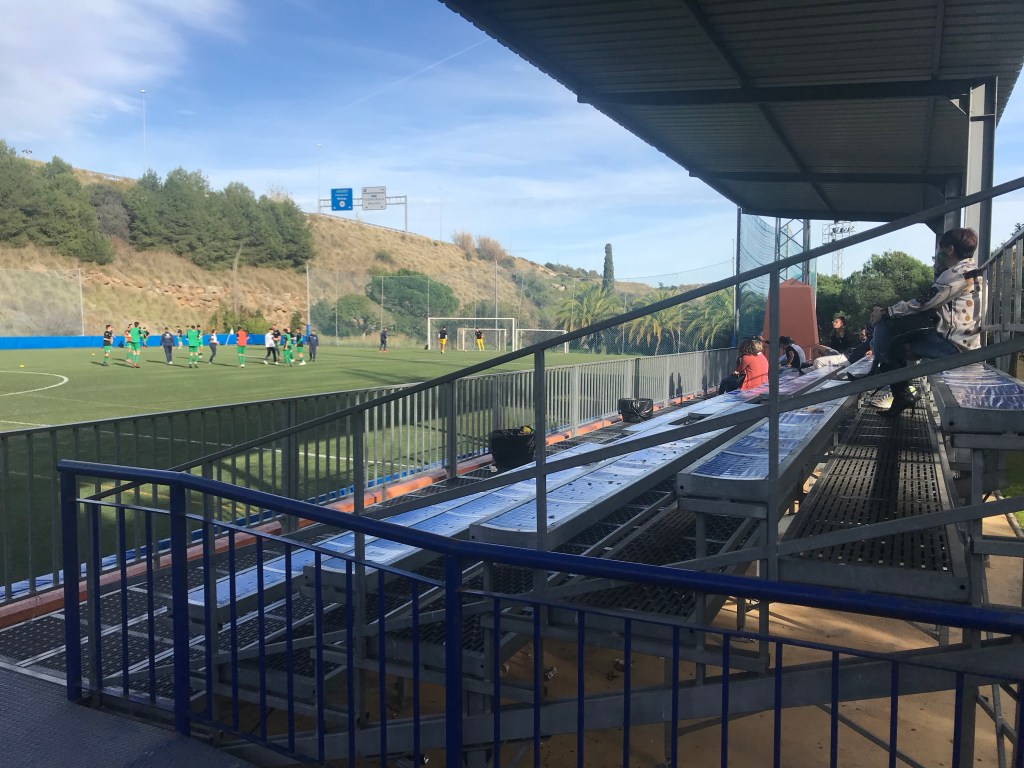
Since this ground is just along the road from CD Atlético Marbella, the general travel advice would be the same (Polideportivo Arroyo Primero or La Perdiz bus stops, around 20 minutes walk) but, as this ground is closer to the Av. Duque de Lerma / A-355, you may see it advised to walk down from that way instead. Be warned that there is a steep hill in-between the main road and the football ground, with no pedestrian path (heading down towards Pablo Picasso), which I feel would be difficult if you’re making the journey at night or you struggle with walking on a gradient. There’s plenty of car parking available close to Campo Arroyo Primero 1 and, with it being located just off the AP-7 (take the exit for La Cañada), this could make for a great ground to visit if you’re in need of a quick getaway after a game or, as a starting place for a day’s journey. The majority of this season’s games have taken place on Sunday evenings, at a variety of kick-off times (4pm-8pm), although, they have also played some midday kick-offs, usually on bank holidays or when there isn’t any junior football taking place on the same day.
Unfortunately, there isn’t a lot within the immediate area surrounding the ground, due to this being further away from Marbella’s centre, however, there is a McDonald’s found at the roundabout on the A-355 if you’re wanting a quick break or a stop-off. It’s also possible to find a suitable double-header of games with their next-door neighbours CD Atlético Marbella, as I have done previously. Overall, AD Pablo Picasso CF are a good club and he was a great person, the only question is, who wouldn’t want to visit Pablo Picasso?
My report on AD Pablo Picasso CF vs Málaga C – https://adayinthelifeofafootballtherapist.sport.blog/2021/04/27/los-ultimos-dias/
CD Vásquez Cultural –
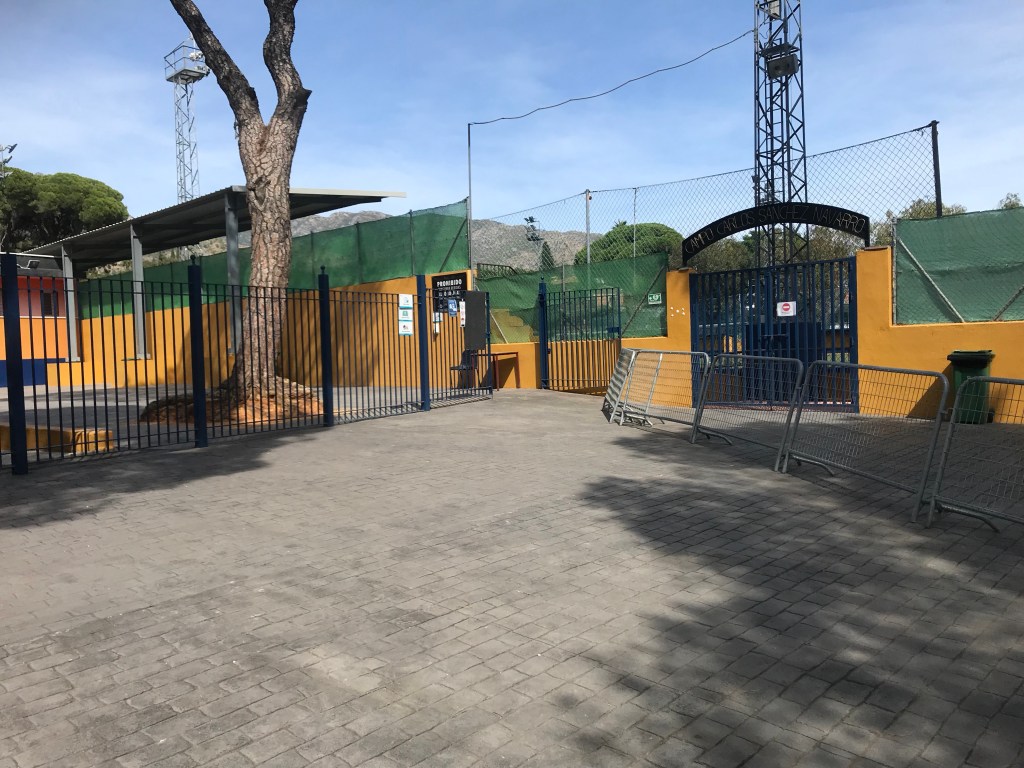
Campo Carlos Sánchez Navarro
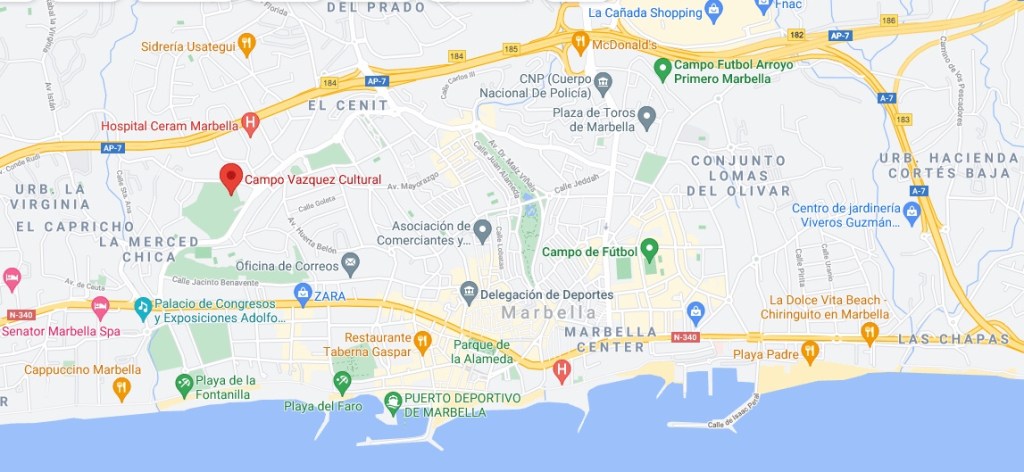
There is one final football ground to be found in the city, although, it currently doesn’t host any senior football…
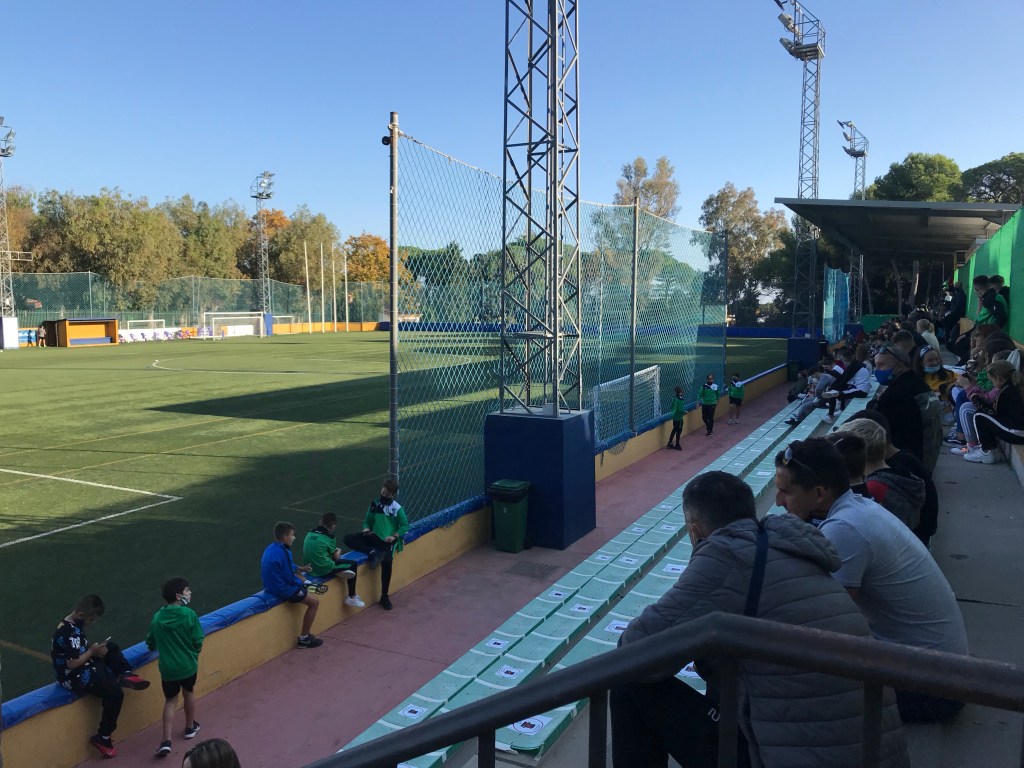
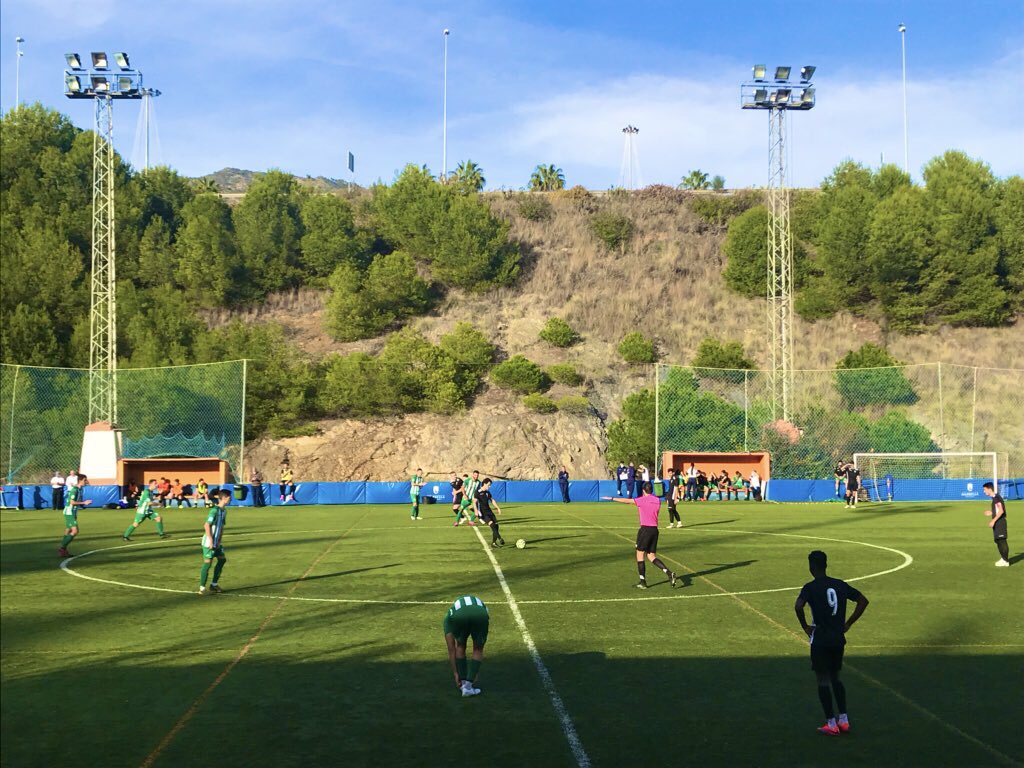
To the west of Marbella is Campo Carlos Sánchez Navarro, home to CD Vásquez Cultural, a junior and youth set-up that is presently performing very well. Their Juvenil A (Under 19s) side play their trade in the top tier Juvenil División de Honor, competing against the likes of Málaga and Granada in the highest level of youth team football in the region, hence why you shouldn’t dismiss watching a game here. The football is very technical and, I’d fully recommend watching a youth team match out here if you get a chance, as you’ll usually find more fans (majority being family and friends) present at Juvenil matches than at many lower-level senior games, with crowds often exceeding a couple of hundred.
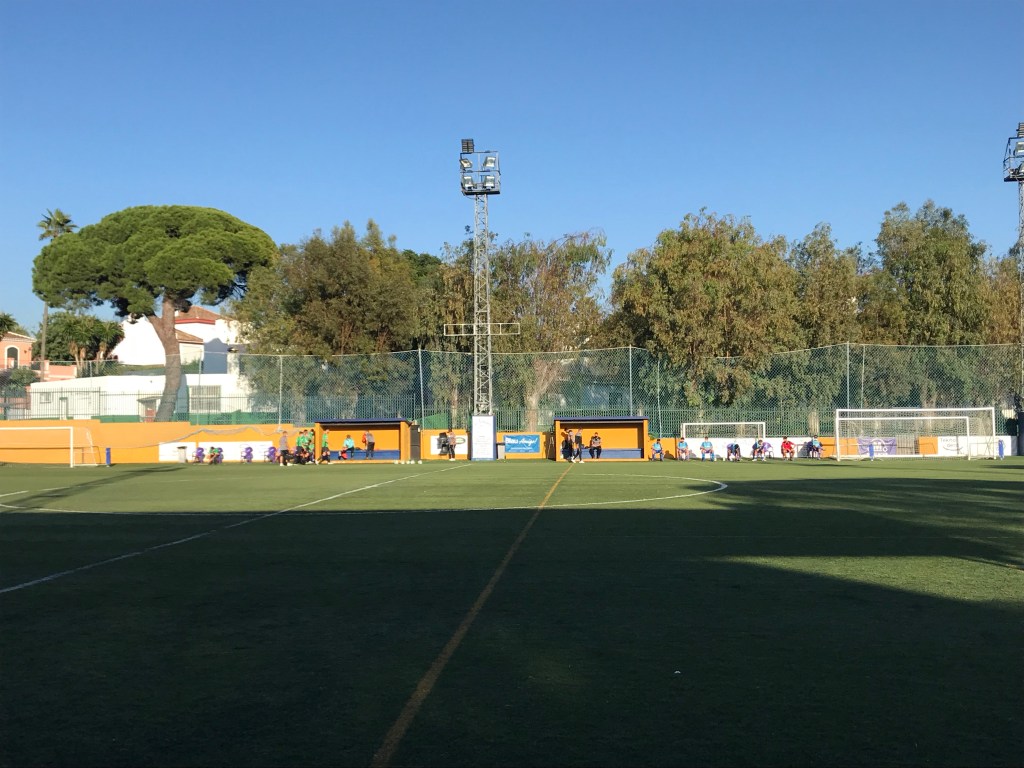
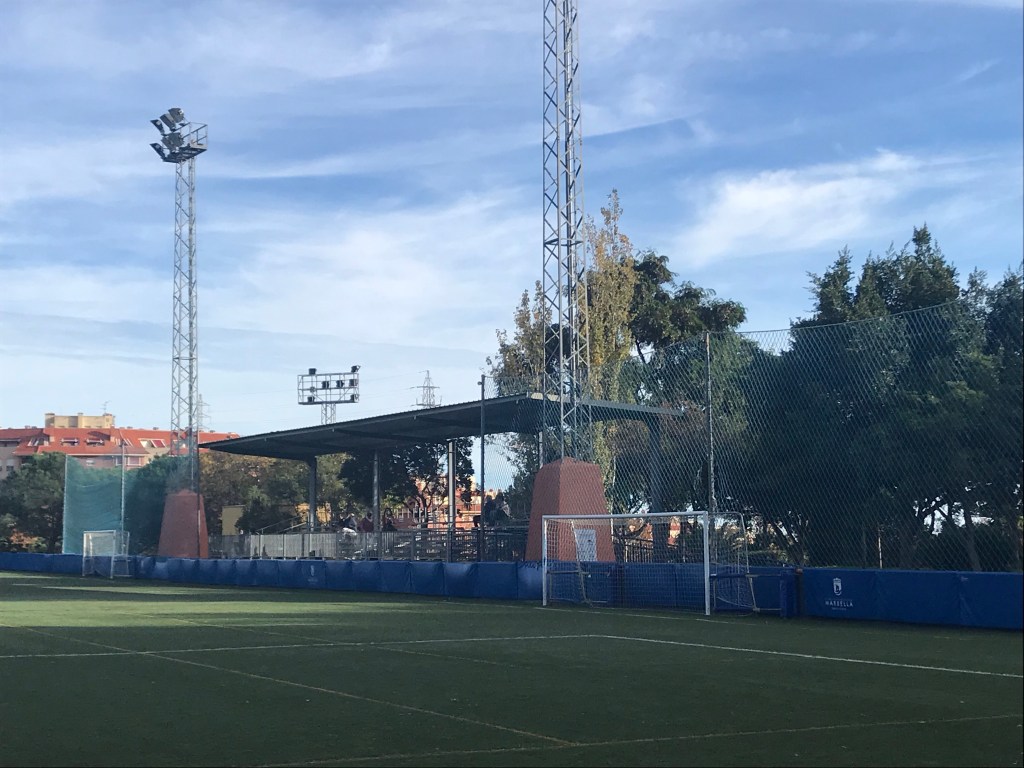
Their ground could be considered to be the second best in Marbella, since it has a large, partially covered seated stand running down one side (with approximately 500 seats), along with a good bar area located just outside the entrance to the stand. Only one side is accessible, with the remaining three sides being penned in due to roads and a nursery, however, the views looking left from the stand are great, plus, you get a good view of the action from anywhere in the stand. Admission was €4 when I visited, which I thought was very reasonable considering the quality of opposition that they face over the season, with their Juvenil A side’s kick-off times tending to be Sunday evenings, which also makes it very useful for watching multiple games in a day.
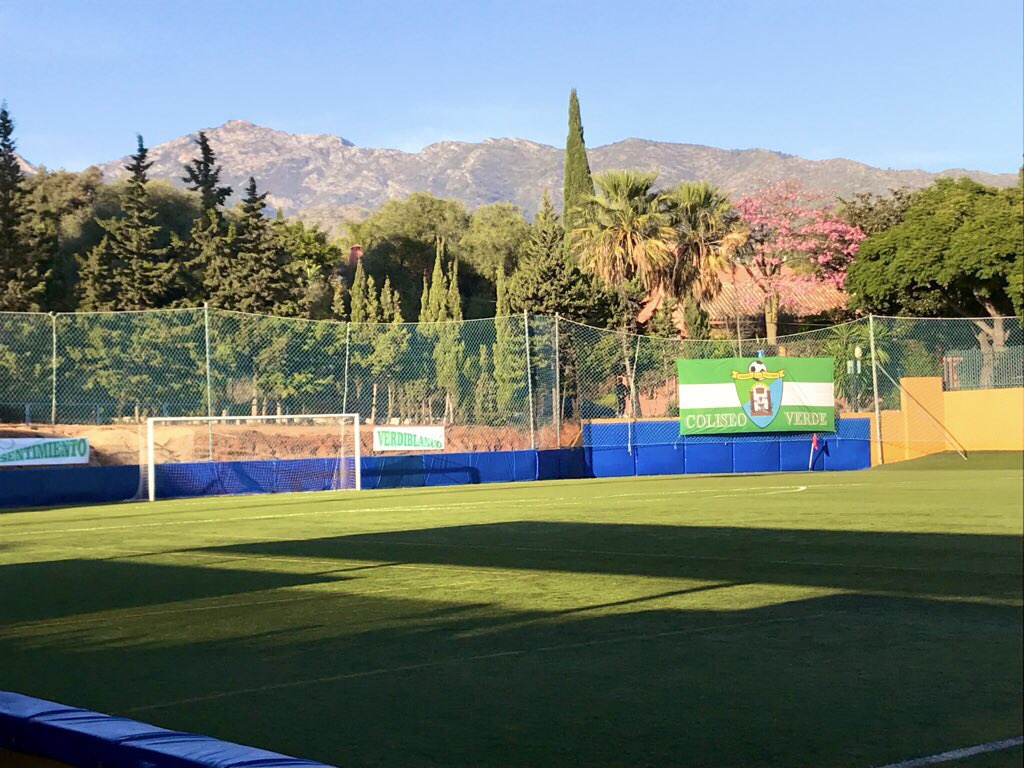
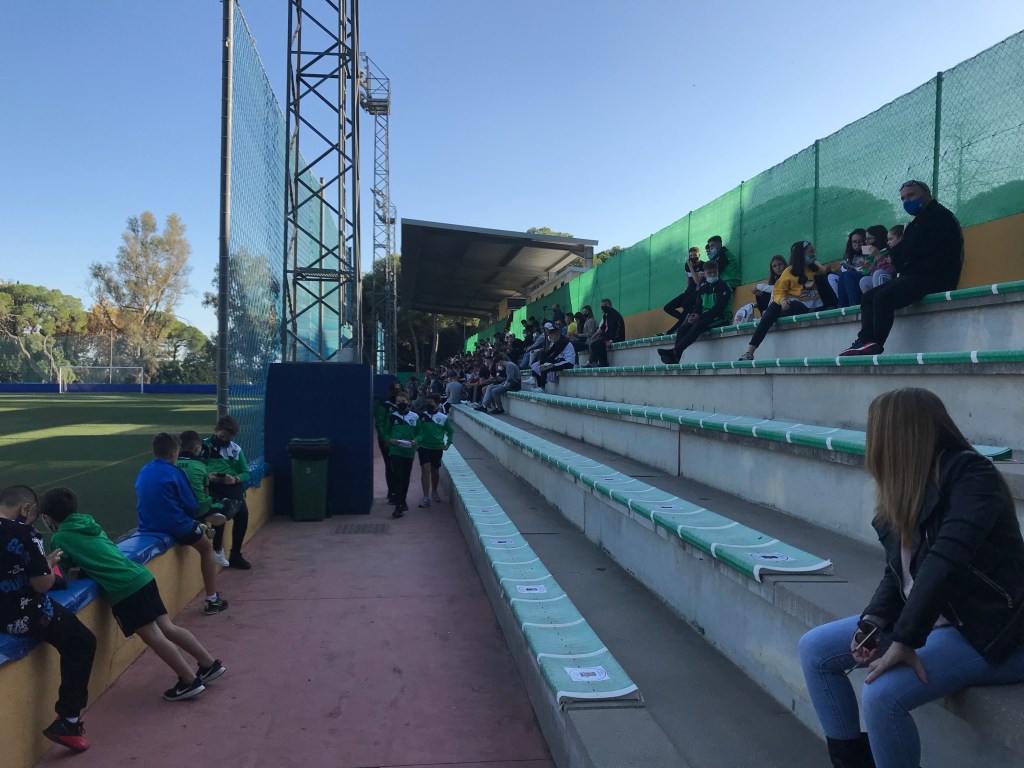
This ground is very simple to drive to as it’s found close to Marbella’s two major roads (N-340 & AP-7) and, there is plenty of car parking to be found on-site (located on Av. Cánovas del Castillo). The ground isn’t particularly far from the centre, but it’s not an easy walk, due to the considerable uphill route that you’d be recommended to take. The closest widely used bus stops are ‘Porcelanosa’ (on the N-340) and ‘La Concha’ (up the hill), taking around 15 minutes to walk from the centre but, like I said, it’s tougher than some of the other routes. This is a very surprising ground to visit and one that is not typically somewhere you’d find in the UK, so it’s well worthy of a visit. The club are active on social media (@CD_VCultural), so keep an eye out for when they’re hosting a big name club.
Special Mentions and notable Costa Del Sol clubs –
There are numerous other senior football clubs that have well-appointed grounds in the nearby districts and towns surrounding Marbella. Some of them have already been mentioned in this piece but, I wanted to give special mentions to a couple of grounds that are well worthy of a visit and, that can be easily reached. Along with this, I’ll give the names and locations of numerous other Costa Del Sol based football clubs, so that you’re fully covered on all the footballing options.
The closest and perhaps most notable place to mention is San Pedro (de Alcántara), a pleasant residential town that is located about 10km south-west of Marbella and, is the home of UD San Pedro, who have recently achieved promotion from the Division de Honór (senior) to the Tercera RFEF, the new fifth tier of Spanish Football. Their Estadio Municipal de San Pedro home (on Diseminado Poligono 27), has recently undergone a major refurbishment, meaning that the ground is now all-seated and more comparable with the likes of Marbella FC and another local club, CD Estepona. After a solitary season stay in the Tercera División Group 9, CD Estepona have been relegated back to the Division de Honór for the 2021/22 season. Their Estadio Francisco Muñoz Pérez (on Av. Juan Carlos I) houses over 3,000 seats along with great views of the hills in the distance. There’s a further two smaller grounds that are within walking distance from UD San Pedro, which are Nueva Andalucía’s La Campana (on Calle Torrente Ballester) and the Marbella Football Center (off Carril del Picaza). Both are worth a visit and can make a useful double-header, with the Marbella Football Center hosting some unusual (and interesting) games throughout the year. There’s also another Marbella Football Center (on Calle la Rivera), in the small luxurious village of Benahavís, although, this appears to be rarely used, doesn’t host a senior football club, plus, there’s no public transport there and walking isn’t advised, so you’ll need a car or taxi if you’re lucky enough to catch a game there.
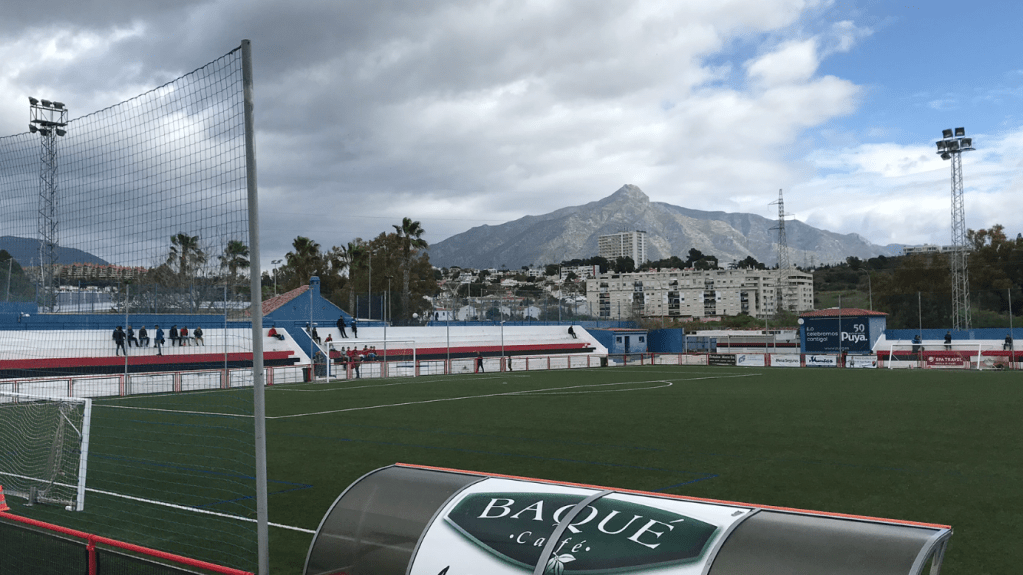
My report on visits to both Nueva Andalucía and UD San Pedro – https://adayinthelifeofafootballtherapist.sport.blog/2021/03/09/un-domingo-doble/
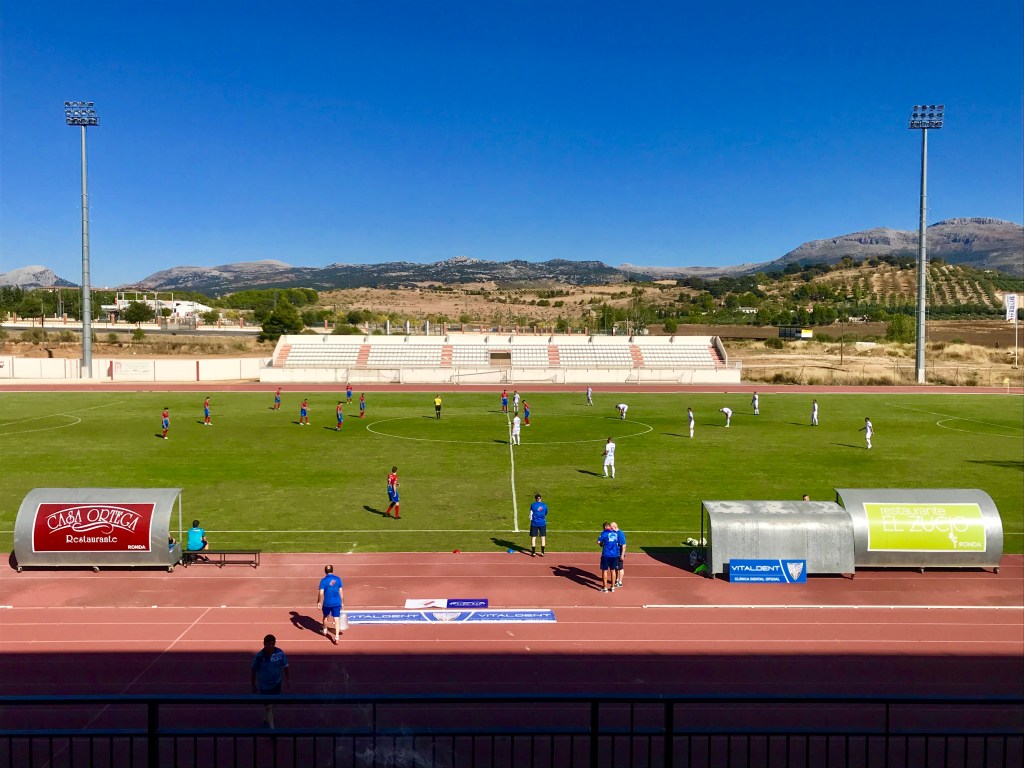
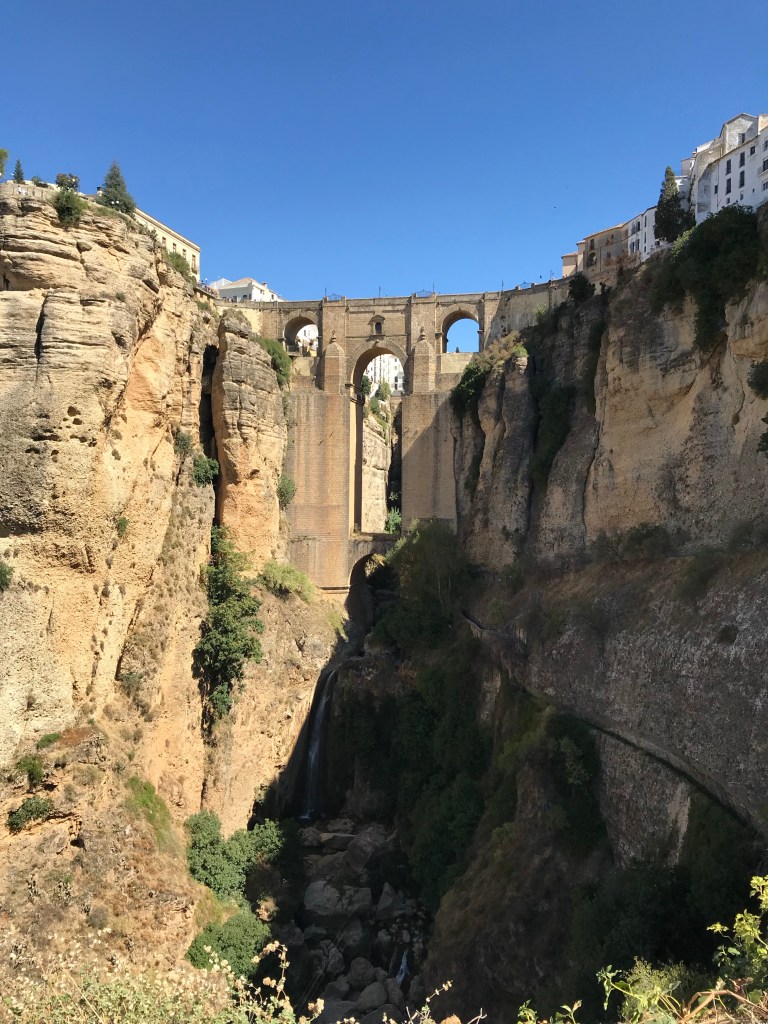
Heading north into the hills above Marbella, you’ll find a couple of village clubs (UD Ojén & CD Monda) before reaching the town of Coín, which is regarded as a pleasant place and hosts 6th tier Club Athletic de Coín (on Calle del Almirante Carrero Blanco). The most popular destination to visit in the mountains is Ronda, which is easily reached by bus from Marbella or by train from Málaga. The town’s main club, CD Ronda (on Calle del Maestro de Obras Diaz), is also a great ground to visit with some stunning scenery when the weather’s clear.
Travelling north-east along the Costa Del Sol, you’ll first find CD Oso CF in Elviria (on Calle de las Acacias) and CD Cala de Mijas (on Av. Sierra Morena), before reaching the town of Fuengirola, which is home to a further four senior clubs (AC Fuengirola, CP Mijas Las Lagunas, UD Fuengirola Los-Boliches & Candor CF). CD Mijas (on Calle 2), Atletico Benamiel (on Calle Roberto Olid) and Juventud Torremolinos CF (on Calle de Pedro Navarro Bruna), are the final clubs of note that are found in the popular tourist locations and, are located close to the coast. Heading south from Estepona the football clubs are sparser, UD Casares (on Ruta de los Pueblos Blancos) and UD Manilva (beside Plaza Martin Carpena) are difficult to visit on public transport, but there are a number of clubs located further south around the bay of Algeciras that are more notable, either for being at a higher level or easier to visit on public transport.
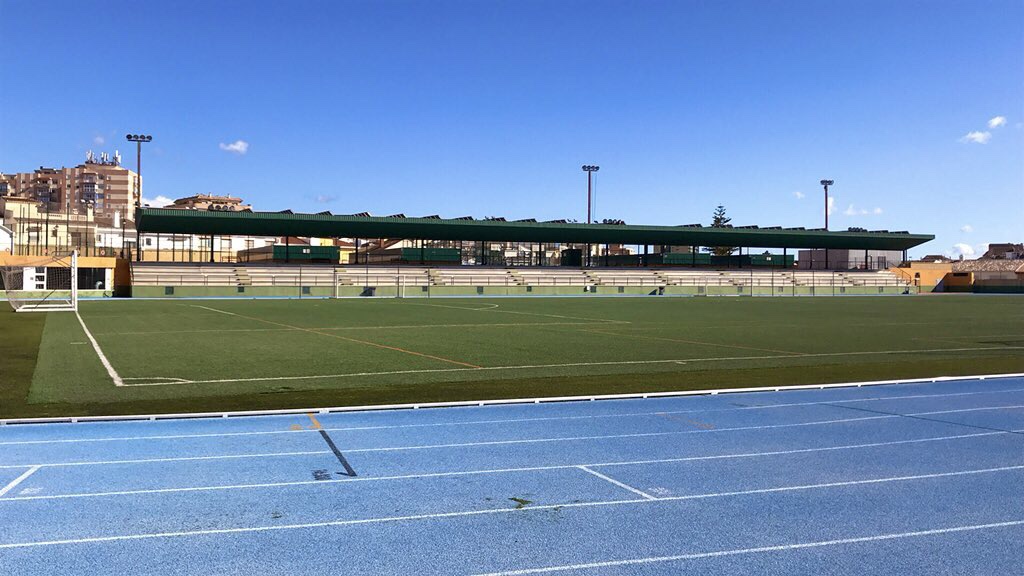
My report on AC Fuengirola vs CD Mijas – https://adayinthelifeofafootballtherapist.sport.blog/2021/03/24/the-fascination-of-fuengirola/
Firstly, you come to UD San Roque, a recently relegated 7th tier small-town club (on Calle de la Ermita) in the hills overlooking Gibraltar, with the town being founded by “The Rock’s” original inhabitants. Then there’s Tercera División Group Ten’s UD Los Barrios (on Av. del Maestro Quico), before two thrid tier (Primera RFEF Group 2) clubs complete the journey, which are Algeciras CF (Complejo deportivo la menacha) and my personal highlight of the entire region, La Línea’s RB Linense (on Av. Principe de Asturias). It’s simply one of those classic old-skool grounds, a real beauty. Hopefully the photo speaks for itself. Gibraltar has currently got one football ground, the Victoria Stadium (on Bayside Road), which is an easy visit since Gibraltar is so small and most importantly, there’s a lot of football played there. The views from inside the ground are great and it’s certainly a unique place to visit, though I suspect many (myself included), will prefer the aforementioned venue that sits on the other side of the border. The current rugby and cricket ground at Europa Point is being developed into a new international stadium, which does look impressive but, we’ll wait and see how long it takes to finish and what the visiting restrictions will be like then. Either way, there’s a lot of places to visit in this part of the world!
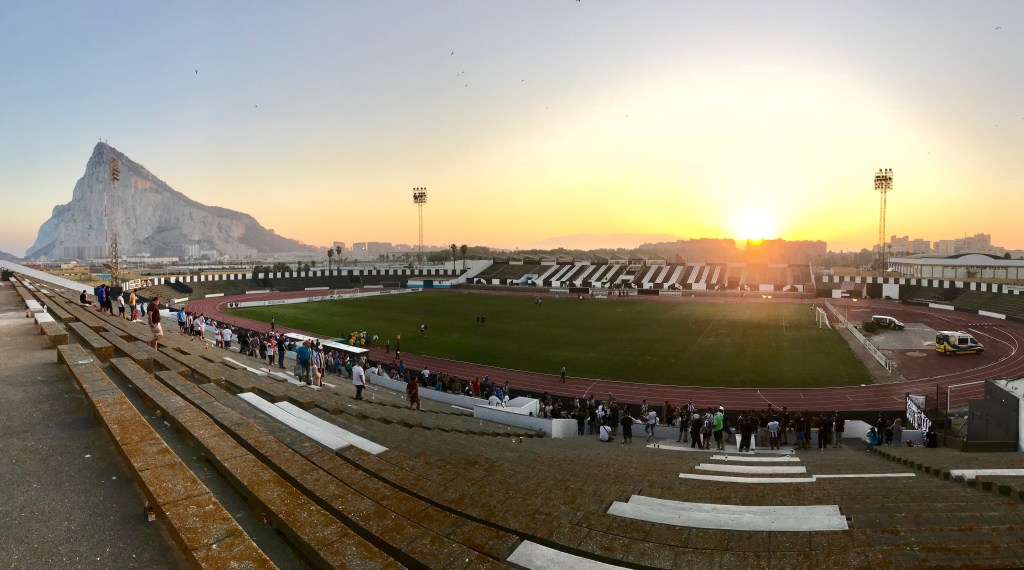
My report on RB Linense vs FC Cartagena – https://adayinthelifeofafootballtherapist.sport.blog/2020/05/17/andalusian-adventures-sun-sea-spanish-football/
Final thoughts –
Well, there you have it, a comprehensive look into the place that I was lucky enough to call my home for a short (but memorable) period of my life. I whole-heartedly recommend visiting Marbella (and the Costa Del Sol) to anyone and, if you are interested, feel free to contact me if there’s anything I can help with. This information is up to date as of July 2021 but, don’t hesitate to contact me if there’s anything I’ve missed out or that I’ve gotten incorrect. All of the clubs in Marbella that have featured in this piece have treated me really well and welcomed me with open arms during my visits, despite the fact that I was a foreigner with a poor grasp of their language. It honestly has been a pleasure to visit and write articles about Marbella’s football clubs over the 2020/21 football season.
The Costa Del Sol and, in particular Marbella, is a must visit place for any Groundhopper so, please share this guide as much as possible, in order to raise the profile and awareness of the lesser-known clubs and the variety of places that this region has to offer. I already can’t wait to return to the region and hopefully, I’ll be seeing some of you out there.
My thanks go to Matt Harrison for his input on this piece, along with everyone who’s viewed, liked or commented on any of my articles this year and be assured that this won’t be the last you hear from me.

Chris Sharp
(All of the photos are taken by me unless I’ve stated otherwise, so please can you give me credit if you wish to use my photos)

