

(15th September 2021)
This was my first chance to watch a game for what seemed like an age, a very busy schedule of event work over the summer meant that I was unable to be standing beside a football pitch since pre-season, but I knew that it’d be worth the wait when I could finally get back on the road again. Considering this was a midweek in mid-September, the options were seemingly plentiful throughout the non-league pyramid, however, we opted for a game that not only made for an entertaining league encounter, but was also taking place at a ground that has certainly seen much larger occasions than was played on this particular evening.
The history between the city of Wakefield and its football teams is an odd one to say the least. Before a couple of years ago, the main recognisable team from the area were Wakefield FC, who themselves were formerly Emley AFC until 2002. The club went to play at ‘Belle Vue’, home of the Wakefield Trinity Rugby League team, before dissolving in 2012. Fast forward seven years and a consortium of businessmen, headed by former professional goalkeeper Chris Turner, wanted to change that. Wakefield AFC were formed in 2019 and joined the Step 7 (Tier 11) Sheffield and Hallamshire County Senior Football League Premier Division, where they are still found today after two incomplete seasons. The club (www.wakefieldafc.co.uk) even acknowledge that “Wakefield is the largest city in the UK without a professional football team and our mission is to change that”, a bold statement for a club that is just seven promotions away from achieving that goal, but at least they haven’t put a time frame on it unlike one club in particular has done…
Without a doubt that is not an easy task, made more difficult by the fact that Wakefield AFC explain that the area is “known as a Rugby League hotbed”, although they believe that there are “many people interested in [watching] and playing football as well as Rugby League” and are certainly showing it from their attendances. It is clear that Rugby League dominates the region, which can be shown not only by the original Wakefield FC playing at a Rugby League ground, but now the current club are too.
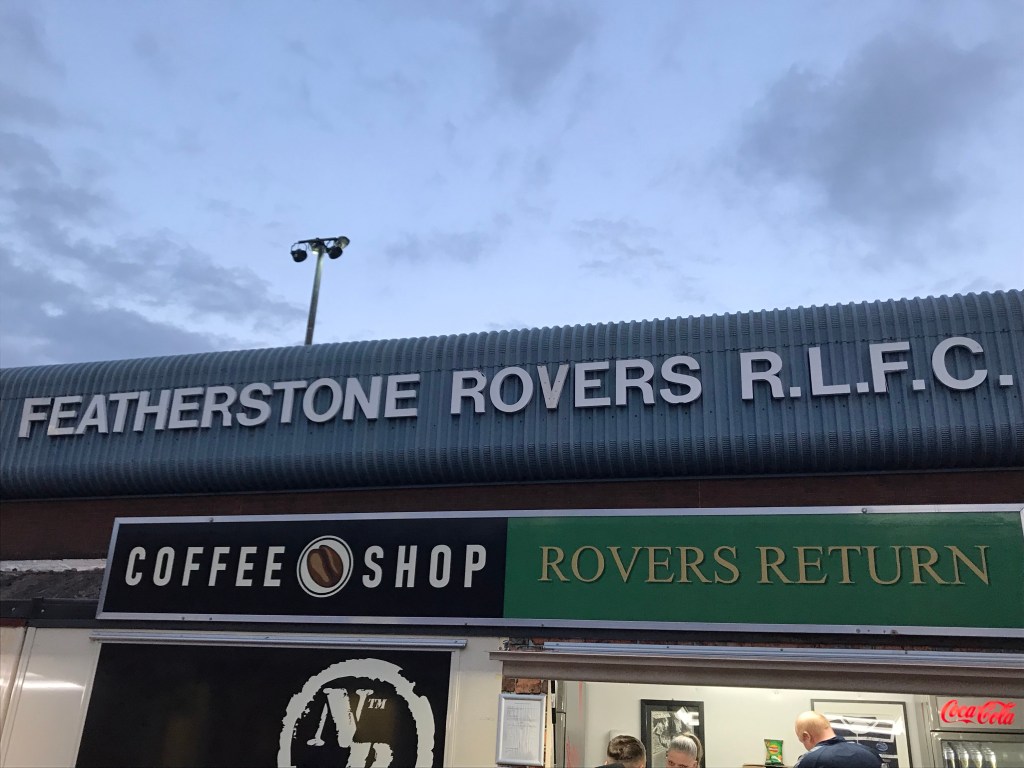
Wakefield AFC have called Featherstone Rovers’ ‘Millenium Stadium’ (traditionally Post Office Road), home since their inception, and, with a capacity just shy of 7,000, would already be fully equipped should they ever reach their ambition of playing in the Football League. I would actually describe myself as a fan of Rugby League, despite living in the West Midlands and very rarely watching matches, with my most recent top flight game being in Australia’s NRL at the Sydney Olympic Stadium. Whilst I was at University, I did watch the local third tier side, Coventry Bears, a handful of times at the ‘Butts Park Arena’, which is now shared by United Counties League Premier South side Coventry United FC, which brings me onto an interesting topic. Over recent years, it does seem to be more common for football clubs to share at alternate sports venues, and vice versa as well, something that in these post-pandemic times we may well see more of, as the sharing of facilities can undoubtedly be for mutual benefit. You can certainly see the benefits to the likes of lower non-league clubs such as Coventry United, Wakefield AFC, Widnes, and Worcester Raiders, but it remains to be seen whether this is sustainable in the long-term.
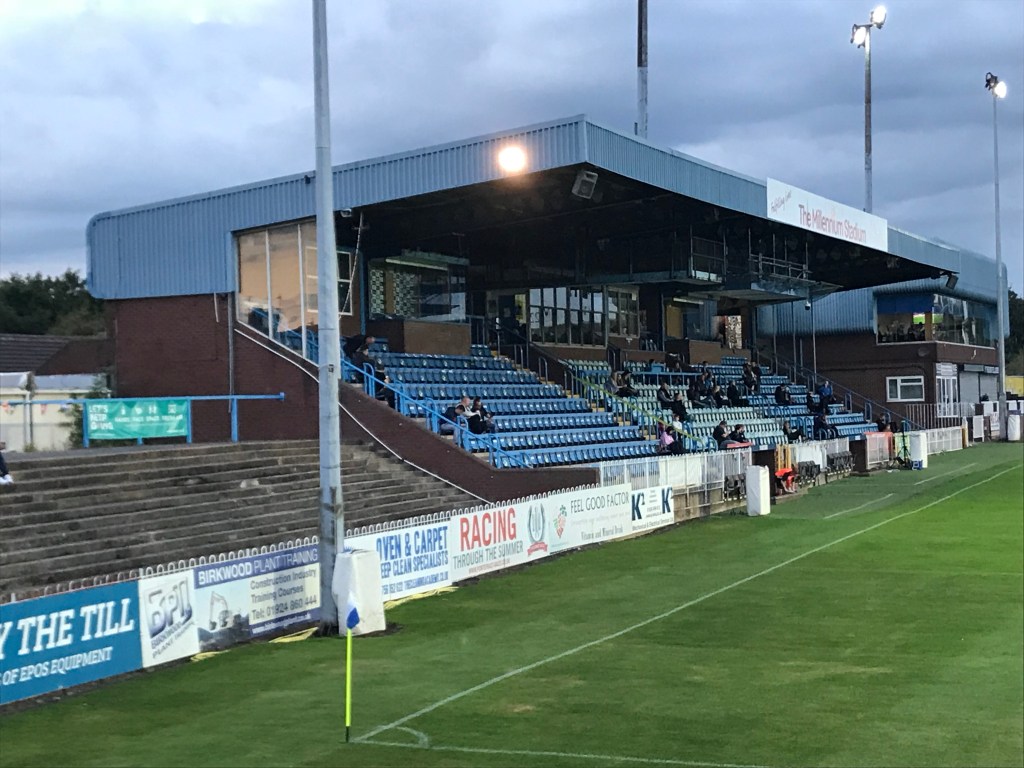
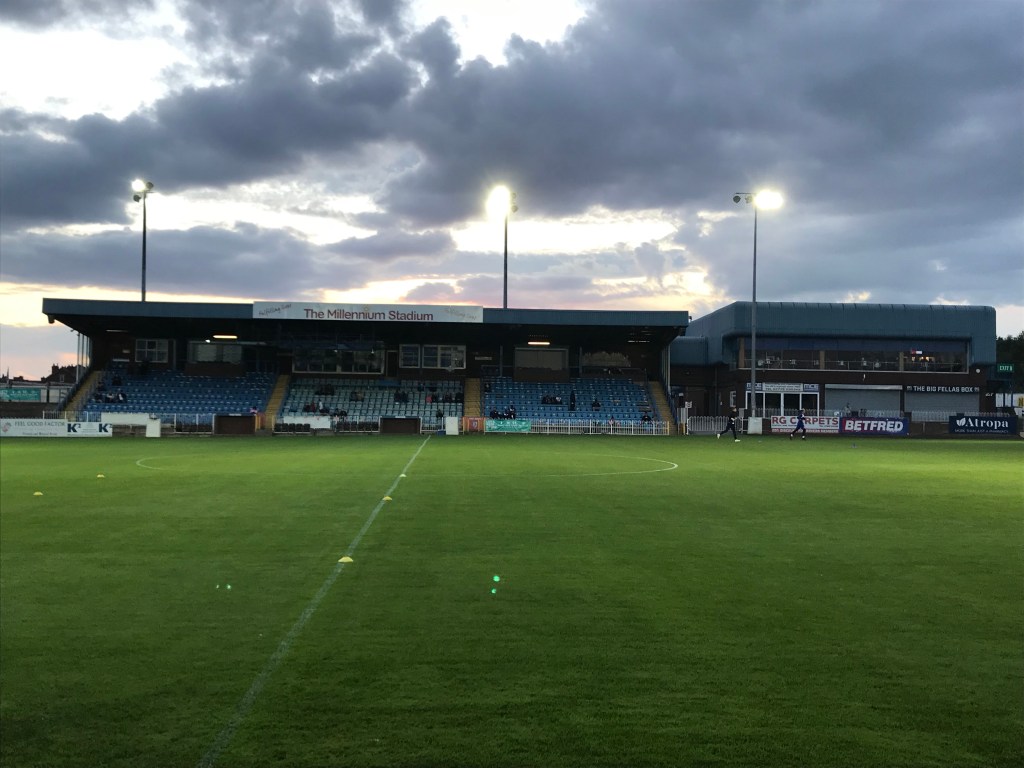
The match I witnessed pitted Wakefield AFC against Houghton Main, who made the approximate 10-mile journey north for this league encounter. Entry was by donation, which I found to be a good system, as I handed over £5 for admission and £3 for a club badge. My only bug bear of the evening was that you had to pay 99p for a QR code to access the online programme, which I’m sure they’d have made a lot more money by printing them off and selling them for £2, particularly since the attendance was a very healthy 287 considering this was a midweek game in a county league.
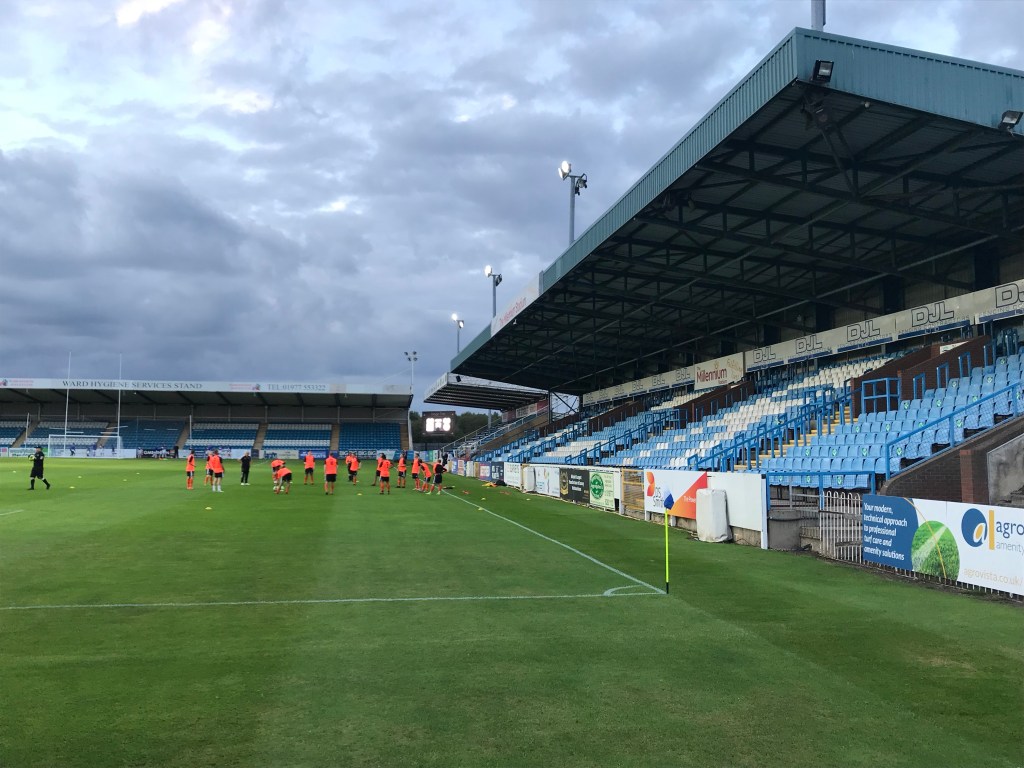
The ‘Millenium Stadium’ itself is very well-appointed, with four different seating stands, including two that were moved from Scarborough FC’s former ‘Athletic Ground’. The sight-lines were excellent no matter where you sat or stood, and I was pleased to see the full ground open to spectators as this isn’t commonplace inside of these larger-than-required venues. The most interesting part of the stadium, and the vantage point from where we spent most of the evening watching the match unfold, was the large concrete terracing behind the goal to your right-hand side as you enter. It’s truly a beauty that is becoming a rarity in modern football grounds, but still seems to be alive and well in traditional Rugby venues and even more so in this part of the world. It sparked a discussion amongst us in relation to English football grounds that have got large or notable terracing that is still in use, particularly in comparison to the other stands. Halesowen Town’s ‘The Grove’ is certainly one that instantly comes to mind, equally Hitchin Town’s ‘Top Field’, but there’s really not many others that I’d describe in the same manner as Featherstone’s, along with a handful of Rugby League grounds for that matter. The pitch was also looking in good condition and allowed for a flowing game, with an unusual feature of the rugby posts standing tall behind the football goal, a reminder for this stadium’s primary purpose.
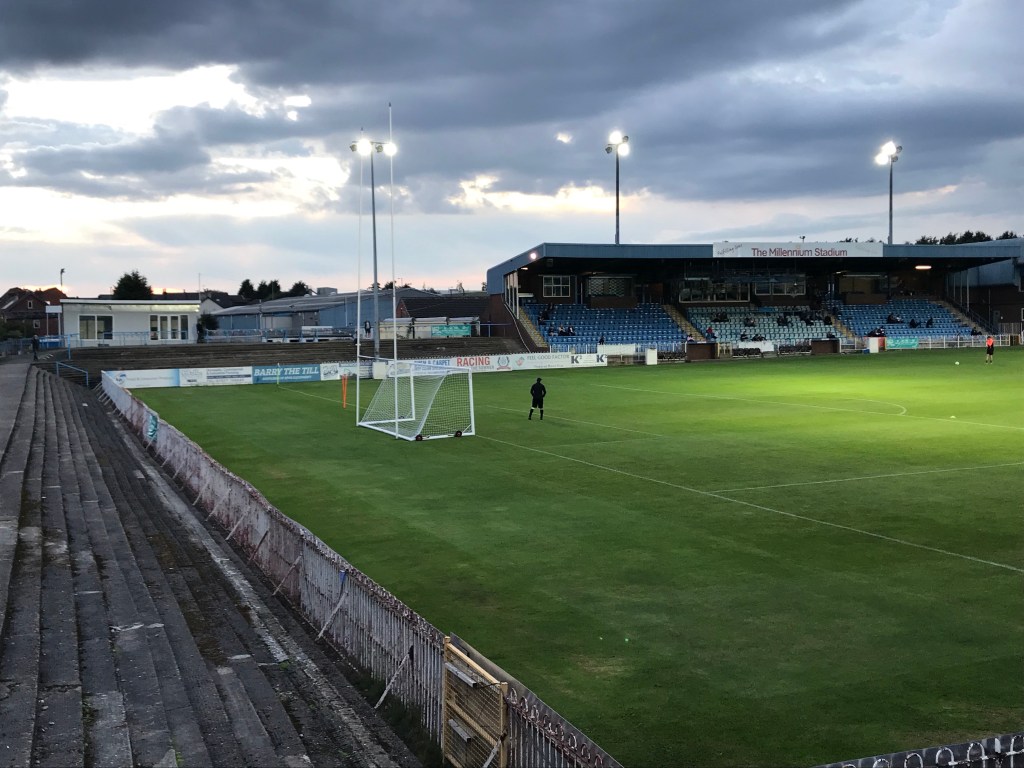
The hosts started the brighter of the two sides, although the first chance of the game fell the way of the visitors after ten minutes played, unfortunately their striker was closer to scoring a conversion through the rugby posts than a goal. They were soon rueing that missed chance, as Wakefield took the lead through a low shot located outside of the box from Mason Rubie. Five minutes later, they were able to double their lead, with Danny Youel scoring from a re-bound at close range. It’s fair to say that the home-side were in the ascendency, with their opposition rarely troubling in the final third. With less than ten minutes to go before the Half-Time whistle, the scoreboard read 3-0, after Jake Morrison was allowed too much time and space to shoot into the net. There wouldn’t be any respite for Houghton Main, as a counter-attack led to Owen Kirman adding his name to the scoresheet and rounded out Wakefield’s scoring for the half, leaving them four goals to the good.
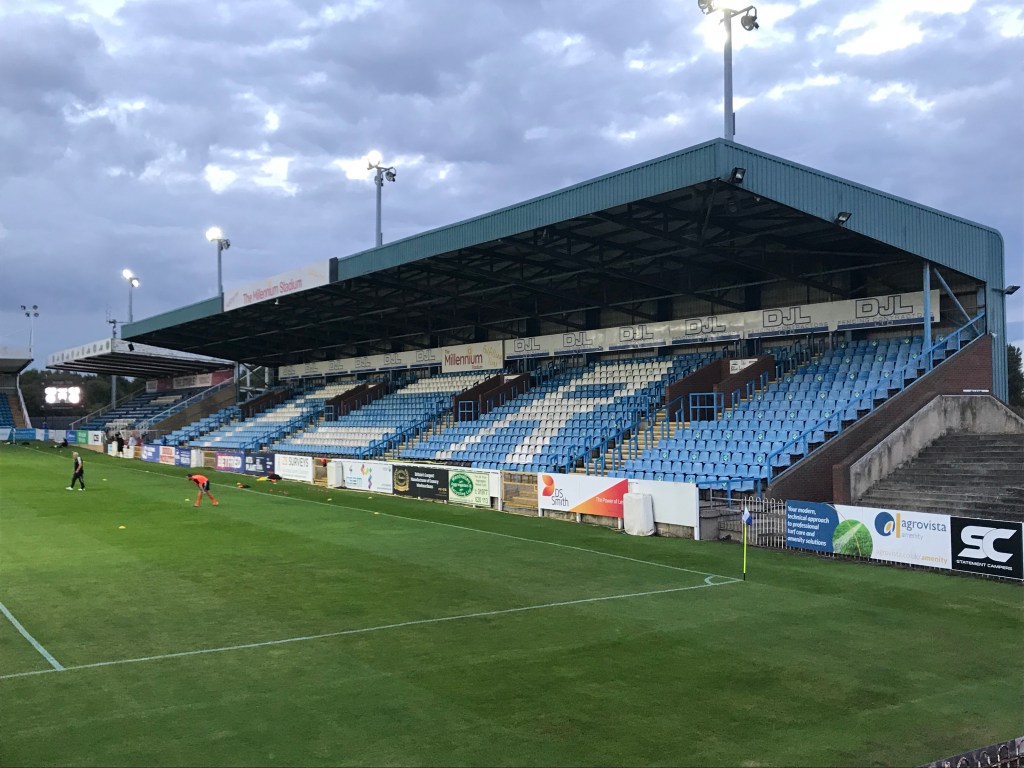
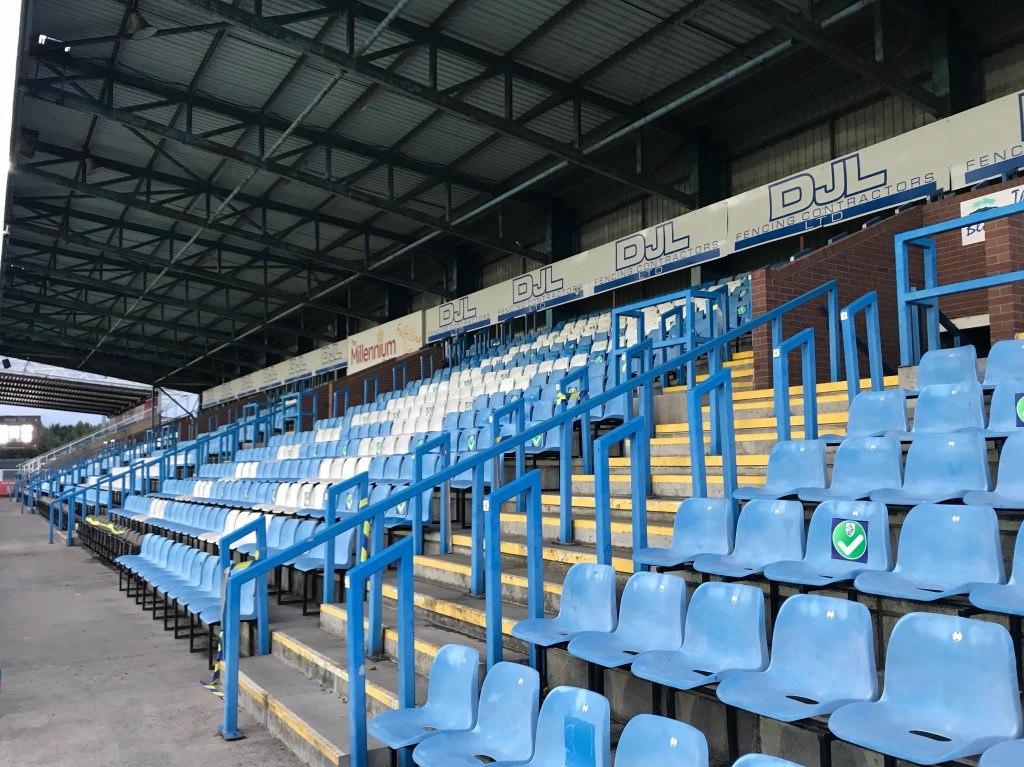
After the break, the game played out in much the same fashion as before. The hosts were clearly in control of the game and could relax after their clinical display in front of goal. The scoring would be completed around the hour-mark, when a well-executed turn on the ball from Jake Morrison allowed him to find the bottom right-corner of the net for his second goal of the game and his team’s fifth. The visitors continued to battle throughout the remainder of the match, but couldn’t muster a goal for themselves, however, from memory I believe that they’d have won if conversions had counted, so at least that’s something. Most of the people in attendance went away happy, having witnessed a competitive and enjoyable game of football that isn’t always associated with this level of the game, at a fascinating venue that I’m sure will attract plenty of Football and Rugby League fans alike.
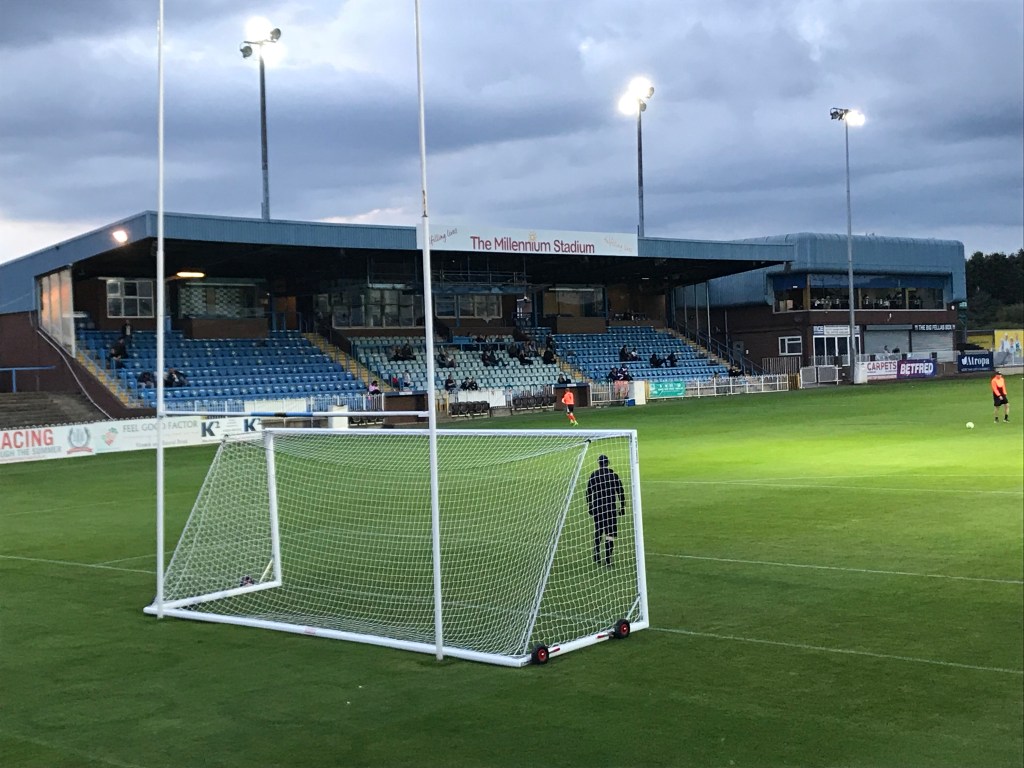
The joy of Groundhopping is that you never know what to expect, whether that’s a particularly eventful game or a non-descript ground you would’ve otherwise never visited, but this was certainly a memorable evening for all the right reasons. I can’t wait to see where I’ll be reporting from next.
Chris Sharp
Travel information –
Featherstone Rovers’ ‘Millenium Stadium’ (Post Office Road, WF7 5EN) is located approximately 7-miles east of Wakefield and 4-miles South-West of Pontefract. It’s a relatively straightforward journey by car, being close to three major roads, the M1, M62 and the A1(M). If you’re heading on the M1, turn at Wakefield, before taking the A638 then A645 to Featherstone. For the M62 or A1(M), instead aim for Pontefract, before taking the A645. Once in Featherstone, turn onto the B6421, and Post Office Road will be on your right hand-side. Car parking is available at the ground and I’d imagine that street parking would be fine otherwise. It’s also a simple journey on public transport, Featherstone train station is only a five-minute walk away from the ground, walk down the B6421 then turn left into Post Office Road. There’re hourly trains (Monday – Saturday) running between Leeds and Knottingley that stop here, which also serve Wakefield’s and Pontefract’s stations. Regular buses also stop on the B6421 beside the train station (Station Lane), running between Wakefield and Pontefract (146, 147) and between Wakefield and Castleford (144, 177).
There’s no reason not to visit this ground, whether it’s for a football or rugby league match!

